


Park Hill Library branch supervisor Tara Bannon (seated second from right) leads a group conversation at the Death Café. The monthly meetings offer the opportunity for people to discuss a topic that is not always easy to talk about. Participants share stories, thoughts, and fears about the end of life.
It’s not a topic most people embrace talking about, let alone discuss in front of a room filled with strangers, but that’s what the monthly Death Café at the Park Hill Branch Library is all about: Listening and learning about the end of life.
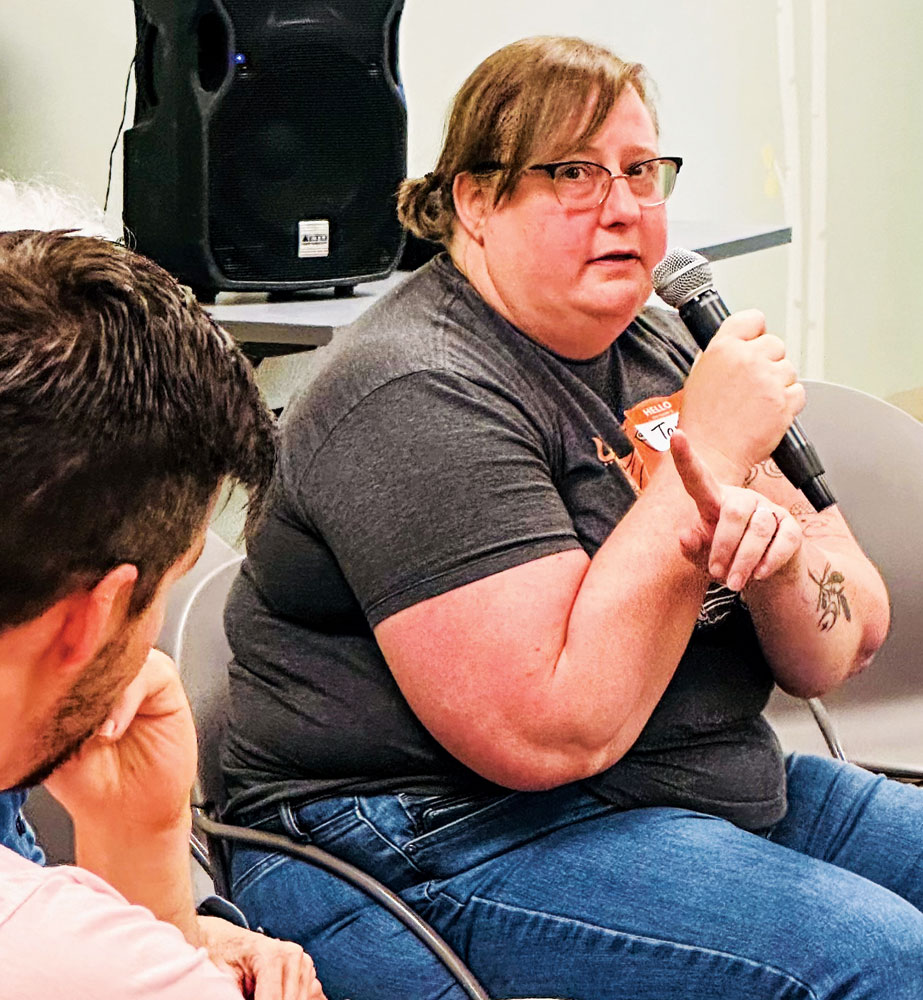
Tara Bannon facilitates the monthly Death Café conversation, passing a microphone around the seated circle of attendees.
Tara Bannon, library branch supervisor, started the group early last year after hosting a panel discussion entitled “Talking about Death Won’t Kill You” On a Monday afternoon, she was at the center of the circle helping people start the conversation, passing a microphone that was met with hesitation at times.
She also provided boxes of tissues strategically placed on empty chairs and gestured to the chocolate treats on a table in the back of the room. “You have to have chocolate to talk about death,” Bannon said.
Participants were reminded that this was not a place to solve problems, but rather a safe space for extra compassion, a free place to cry, and a place that an attendee named Kirsti said she looks forward to coming every month. She said she finds safety talking inside the room rather than sharing her inner thoughts with people outside, “like an Uber or Lyft driver.” (Front Porch used only first names of participants in this story.)
There were about 20 people of all ages at the June meeting, and all with different reasons for being there.
“I had never heard of a Death Café until I heard a podcast by two women who have young-onset Parkinson’s disease, which I also have. The subject was grief, and they were mentioning Death Cafés and death doulas…I googled Death Cafés in Denver and found this one at a library where I used to bring my kids,” Kirsti said.
There were several people at the meeting for their first time, including a woman navigating her aging out-of-town parents.
“My dad right now is doing most of the caregiving for my mom,” said the woman, who asked not to be identified. “They live in Oregon, and my sister’s there, but I’m going through this tension in my brain about staying in Denver or moving, so that’s really been on my mind.”
She added, “My dad’s healthy but it just feels like it’s getting closer and closer to him needing real help. I don’t have a family here, so I feel like it’s kind of on me to do that. That’s part of why I’m here.”
Caregivers were a common topic. Virginia said caregivers are “an important part of the process,” and reminded everyone, “We need to talk more about how to support them.”
Veronica agreed and stressed the need to show gratitude for the “12 million unpaid caregivers in this country, specifically taking care of patients, people, and family members with Alzheimer’s and dementia. Most of them are women, daughters, family members, and it’s very stressful.”
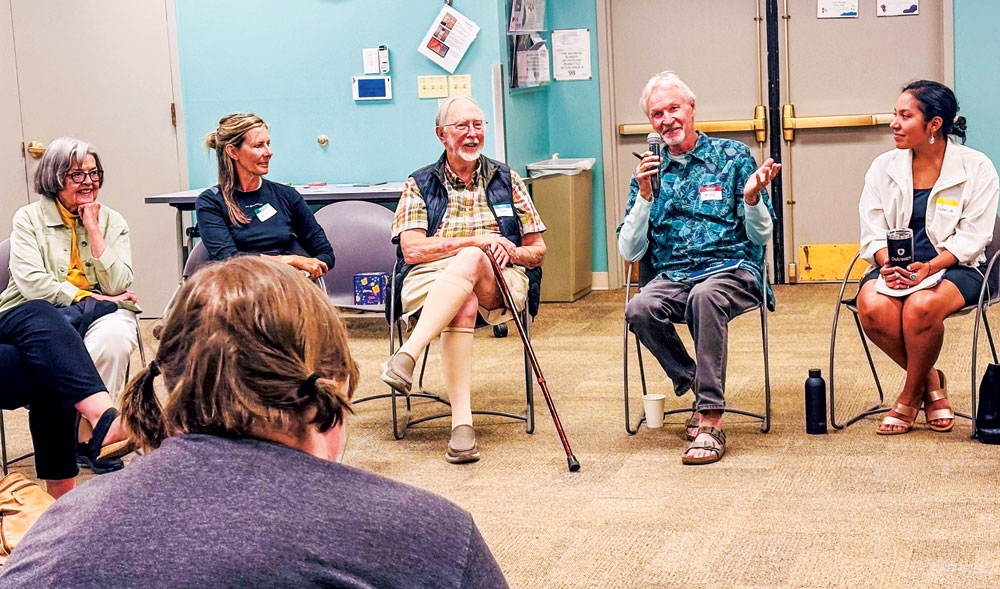
There are tears and laughter at the meetings of the Death Café in the Park Hill Library, which are free and open to anyone who wants to attend.
Veronica’s mother passed away from dementia in November 2023. She offered support for others in the meeting by sharing the 24/7 Alzheimer’s Association hotline (800-272-3900), which she didn’t know about when she was taking care of her mom.
Resources, advice, and books were all passed around the room, coupled with nods and gestures of support, and laughter at times.
One young person at the meeting asked a question which brought up a lot of thoughts from others: “How do you learn to process death?”
“It’s important to know the stories,” said Ed. “It’s difficult for men to have these conversations…Think back on your life and decisions you’ve made. The most difficult thing is grieving about things you’ve done in the past. Have no regrets, make peace.”
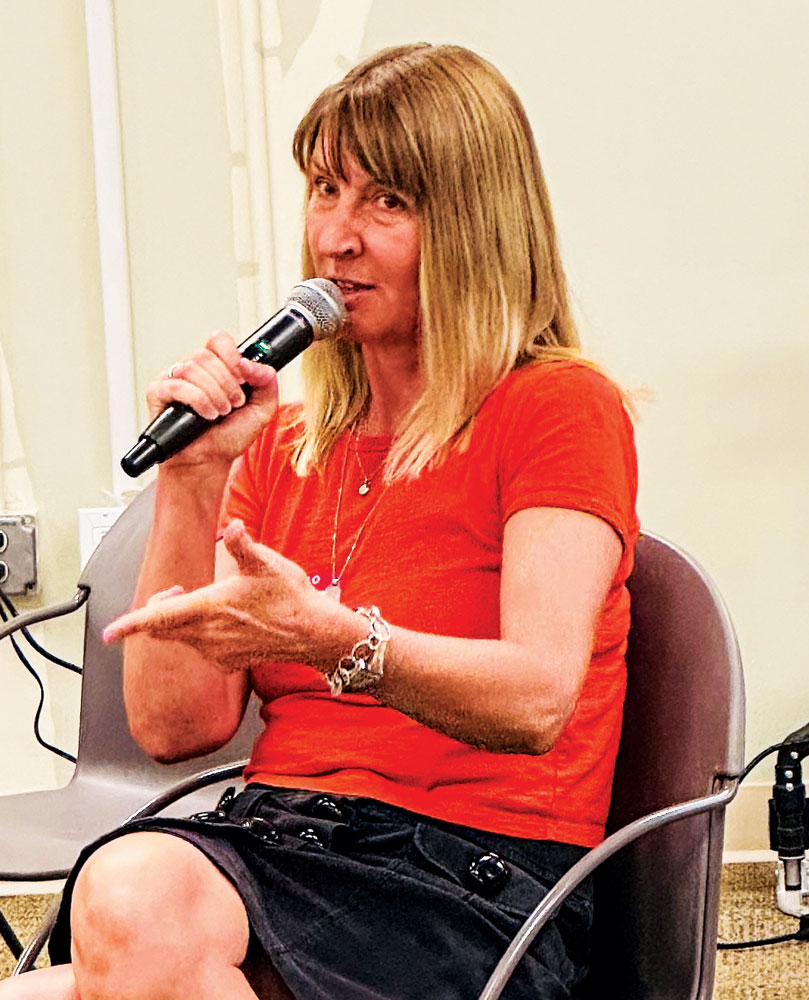
Kirsti talks to the group about her experiences attending the monthly meetings at the library.
Kirsti added, “On my deathbed I don’t want to have revenge or anything.” She said she’s trying to heal relationships, but “some people are more challenging than others.”
And Veronica admitted she hasn’t fully “bought in” to acceptance of the inevitability of her own death but has learned through the experience of watching death how to accept it.
“I learned through sitting with my father when he took his last breath and sitting with my husband when he took his last breath, and being with my mom through the process of dying, through dementia and with dementia,” Veronica said. “I guess my experience of watching death has helped me accept it.”
She doesn’t recommend that amount of grief to anyone, “but if you’re able to and have the opportunity to be with a loved one [in the last moments of life], it’s the most important thing I’ve ever experienced, and it just reminds me that love is really the most important thing. To be with someone and let them know that they’re loved.”
For Veronica, it’s all about being willing and able to move forward. “I’m able to keep living with them in my life in a different way,” she said.
Bannon told the group that she’s not afraid of what happened to her before she was born, so “why worry about what happens after?” She said she’s mostly worried about missing out on the fun in life, and encouraged everyone to try a three-minute dance party during a car wash with music blaring.
Every month, there’s a different crowd at the gathering, so the conversations are different. There’s always support for people to share their stories during the Death Café, which is part of an international movement that invites people to gather, and normalize conversations around death—to make the most of life.
The next Death Café meetings are scheduled on September 22, October 27, November 24 and December 15 from 2–3:30pm at the Park Hill Branch Library. For resources and information, visit https://deathcafe.com/how/ to set up a Death Café of your own.
Front Porch photos by Christie Gosch
I think the date is wrong for the next meeting. Do you mean Monday, 8/25?
You are correct, it is Monday, August 25 – I just changed it in the article. Thank you for bringing this to our attention!