


Substantial funding cuts mean that The Urban Farm won’t be supplying fresh produce for a local children’s food program.
Over the past several months, non-profits across the country have been hit with federal funding cuts that have led to curtailed services, employee layoffs, and big questions about how some organizations will survive.
Denver non-profits are no exception. Denver Urban Gardens and The Urban Farm—two long-established organizations that focus on growing food; building community; and promoting equity, diversity, and inclusion—now find themselves struggling to fulfill their missions.
Denver Urban Gardens has taken the most direct hit. Over the past 40 years, the organization has created more than 200 community gardens and food forests on public land across the metro area. (Food forests are small areas where Denver Urban Gardens installs trees and bushes in public spaces where anyone can harvest the fruit, berries, or nuts that are produced).
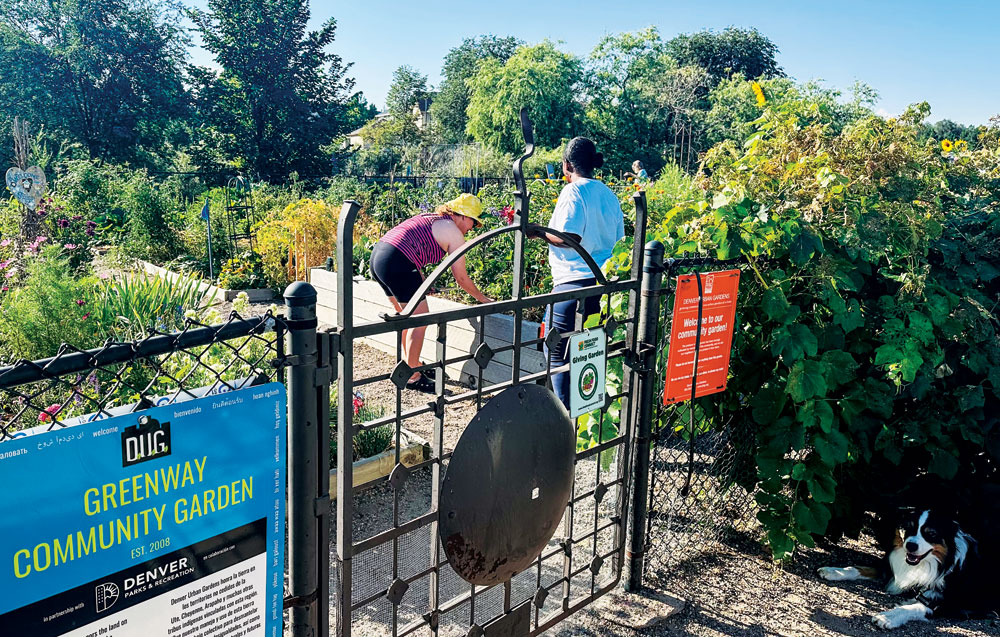
Denver Urban Garden volunteers harvest produce that will be donated to local food banks. A food forest is pictured at the back of the garden.
Last year, the organization was awarded $1.2 million in grants from the U.S. Environmental Protection Agency (EPA), the U.S. Department of Agriculture, and the U.S. Forest Service. The money was to be used to install six community gardens and nine food forests in an area of west Denver that is considered a food desert because it is difficult for residents to access affordable fresh produce.
This summer, the EPA and the Forest Service announced they were withdrawing $850,000 of the grant money. Denver Urban Gardens Executive Director Linda Appel Lipsius said she’s had to drastically cut back the plans for west Denver.
“We are now doing just two gardens and three food forests,” Lipsius said. “And that’s just the beginning of the snowball.” She said she will have to restructure the organization, lay off employees, and curtail any other expansion of gardens in the near future.
“It’s just so heartbreaking,” she said. “When we got the grants, we thought it was a new era, that people finally understood how community gardens have all sorts of health benefits. So this has been a tremendous blow.”
Lipsius said she knows that her organization was denied the grants because its mission is environmental justice.
“The letter [rescinding the grants] said it was because of our ‘woke’ agenda,” she said. “We’re talking about building gardens in neighborhoods that don’t have grocery stores. That’s radical?” Her organization protested the funding cuts, but she’s not optimistic they will be restored.
Compounding the problem is all of the economic uncertainty: City budgets have been slashed and philanthropic donor organizations are worried about the economy. “Everybody is hedging their bets right now,” Lipsius said.
That ripple effect also impacts The Urban Farm, located at the edge of Central Park. While the organization didn’t receive some EPA grants that had been all but assured to help restore some pastureland, the bigger issue is the loss of local government money.
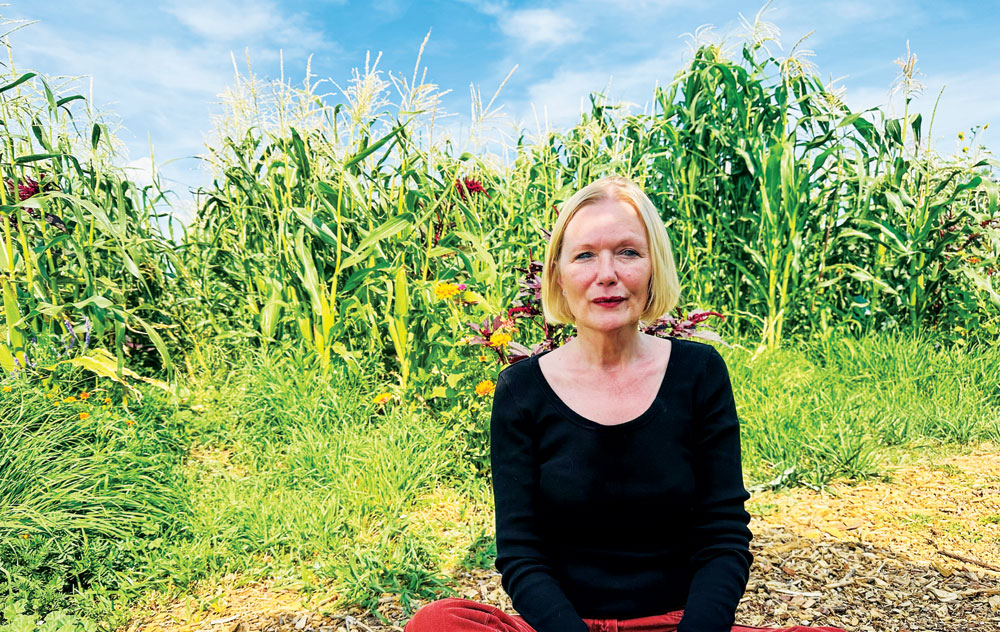
The Urban Farm’s Paige Heydon said funding cuts threaten the future of its gardening program.
“We typically get a lot of money from the City, but they are cutting way back this year because the City itself has lost federal funding for food programs,” said Paige Heydon, The Urban Farm’s executive director.
The farm’s mission is to provide an opportunity for urban youth to participate in sustainable food systems by offering programs in organic gardening, animal husbandry, land conservation, and food security. Almost all of the food grown at the farm was sold to the City through a program called Healthy Food for Denver’s Kids.
“This year we were expecting $200,000 from that program. Instead, we’re getting just $50,000,” Heydon said. She is working with her board of directors to figure out how to restructure so the garden can continue. And she knows there will have to be layoffs.
“This is really hard on the staff,” she said. “They’ve put their blood, sweat, and tears into this farm and they’re doing everything they’re supposed to be doing, but the money is just going away.”
Heydon has also seen local private funding dry up. “I don’t blame those funders. They are being asked to provide money to help homeless youth and provide basic services. They have to go where the most need is right now,” Heydon said. “Donors are scared about their own situation. They’re less willing to give until the world makes sense again.”
To try to keep the garden in operation, Heydon is thinking about partnerships with other food organizations. But she knows they are all struggling.
“I’ve been in the non-profit world for 25 years and I’ve never seen a year like this where you just don’t know where your next dollar is coming from,” Heydon said. “Most of our partners have already laid off staff, so it’s a pretty painful process. All of this means that thousands of people won’t get healthy food next year.”
Front Porch photos by Christie Gosch
0 Comments