

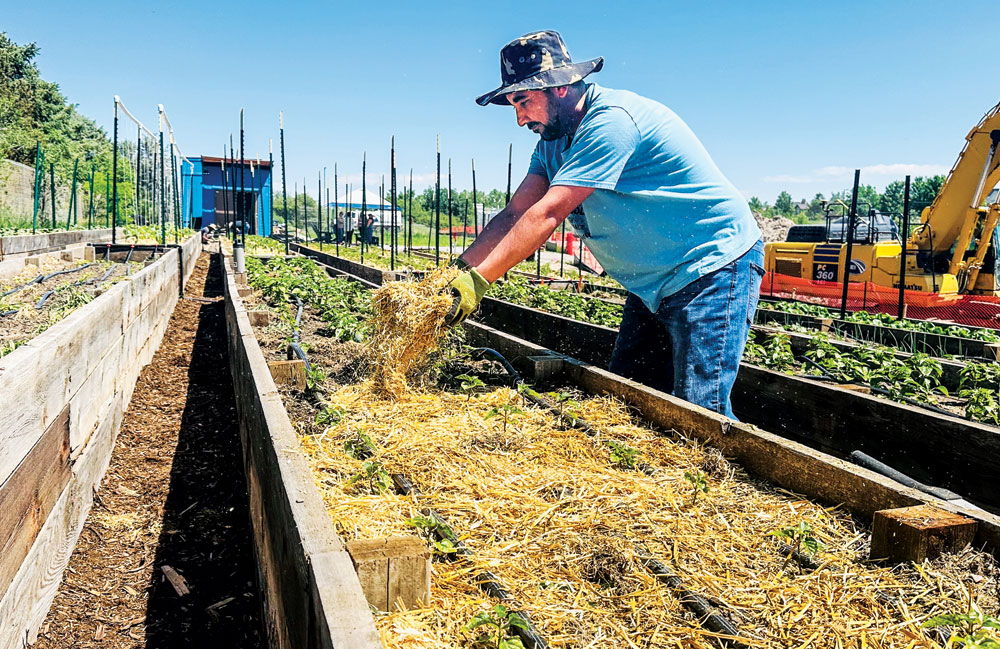
The new home for Village Farms at Stanley is filled with new growth and plans for the future. Workers are getting used to the location and the construction noise next door.
Standing under a shade tent at the new Village Farms at Stanley as loud bulldozers move rocks nearby, workers are busy planting the fields for the summer growing season.
The Westerly Creek Improvement Project happening on the west side of Stanley Marketplace meant the farms needed to relocate to a new spot just north of the original location. Now that the farm is settled in the permanent location, Andrea Zimmer, associate director of food access, said they’re able to “establish our roots a little bit more” and “can think a little more long term” about community building, such as adding a patio to the main trailer building to create an event space. “This is a big asset for the organization to invite [the community] into what Village Exchange is doing as a whole, and we are going to be doing that with workshops and events,” said Zimmer.
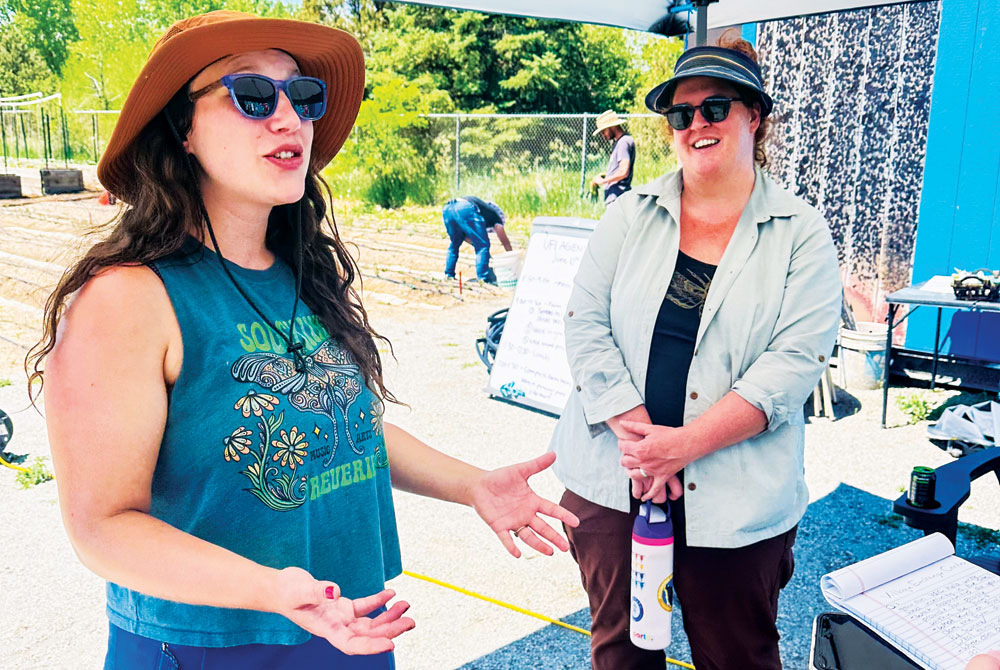
Village Farms at Stanley Program Director Sydney Quynn (left) and Associate Director of Food Access Andrea Zimmerman (right).
The move was a big project and there was help from the construction crew working nearby.
“The people who are leading the whole operation have been really wonderful in helping us with a lot of different pieces,” Zimmer said. From moving the garden beds and the trailer to donating wood chips for the farm’s pathways, the donated labor from the construction project helped get the farm operational in its new location in time for the growing season this summer.
The farm is part of the northwest Aurora Village Exchange Center (VEC), which provides services such as food, vaccinations, job training, legal resources, and education to migrant and refugee families.
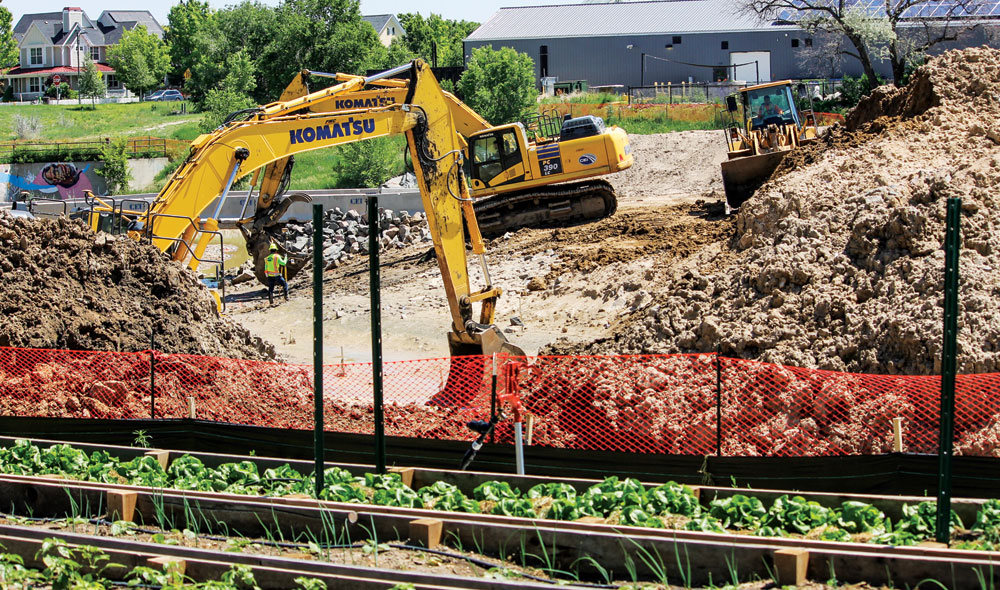
Construction from the Westerly Creek Improvement Project meant Village Farms needed to relocate further north, closer to 26th Ave.
Every year, half of the approximately 2,500 pounds of food grown at the farm goes to the VEC food pantry and the other half is sold to create earned income for the farm workers. The focus is on growing foods that are culturally significant for both the farm participants and the families that come to the food pantry.
Sydney Quynn, Village Farms program director, explained how they grow a lot of tomatillos, onions, and tomatoes for salsa, as well as a special leek from Afghanistan called gandana, aji dulce peppers from Venezuela, white garden eggplants from Ghana, okra from West Africa, and dalle khursani peppers from Nepal.
“We focus on growing things that have a shorter day to maturity because our growing season is pretty short here in Colorado, but we push it a little bit,” said Quynn. The farm grows bitter melon that’s native to Thailand but does well in the full sun of the farm’s new location despite Colorado’s climate differing from the tropical one the plant is traditionally grown in.
“We are a community center that supports through various responsive resources into the community,” said Zimmer. The farm works with people in the Urban Farming Immersion Program where participants work at the farm for 10 hours a week from May to October. They also teach the participants about horticulture and job readiness. “I think we do a really good job at creating a really meaningful experience for folks,” said Quynn. “They’re understanding how what they’re doing that day connects to the larger picture.”
Volunteers are welcome and needed at the farm and there are two community “Brunch and You Pick Bouquet” events in August and September—tickets can be purchased at https://tinyurl.com/FPVillageFarm
“This is going to be a gorgeous community space,” Zimmer said. “We are excited for what the next steps are going to be.”
Front Porch photos by Christie Gosch
0 Comments