

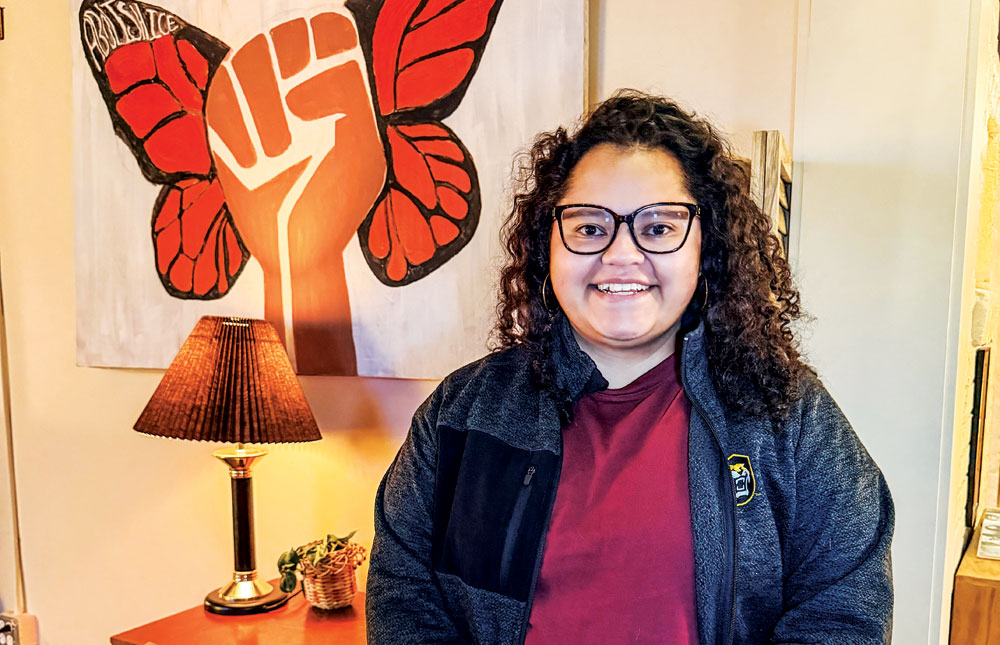
Inside Ollin Cafetzin coffee shop in Aurora, Ward I city councilmember Gianina Horton talked about her goals for the future of the area.
‘We are on the precipice of immense change.’ —Ward I’s Gianina Horton
Gianina Horton was born and raised in Denver. At 33, she is the eldest of six siblings and now lives in northwest Aurora, where in November she was elected to represent the area as the new city council member for Ward I. Her district includes parts of Central Park, Original Aurora, the University of Colorado Anschutz, and the Aurora Cultural Arts District.
A few days after Horton was sworn in, she sat down to talk with Front Porch at the Ollin Cafetzin coffee shop, a new business along East Colfax—an area in the middle of a conversation around change.
Here she addresses that change, her strong family ties (one of her brothers was her campaign treasurer), and the need to move carefully into the future.
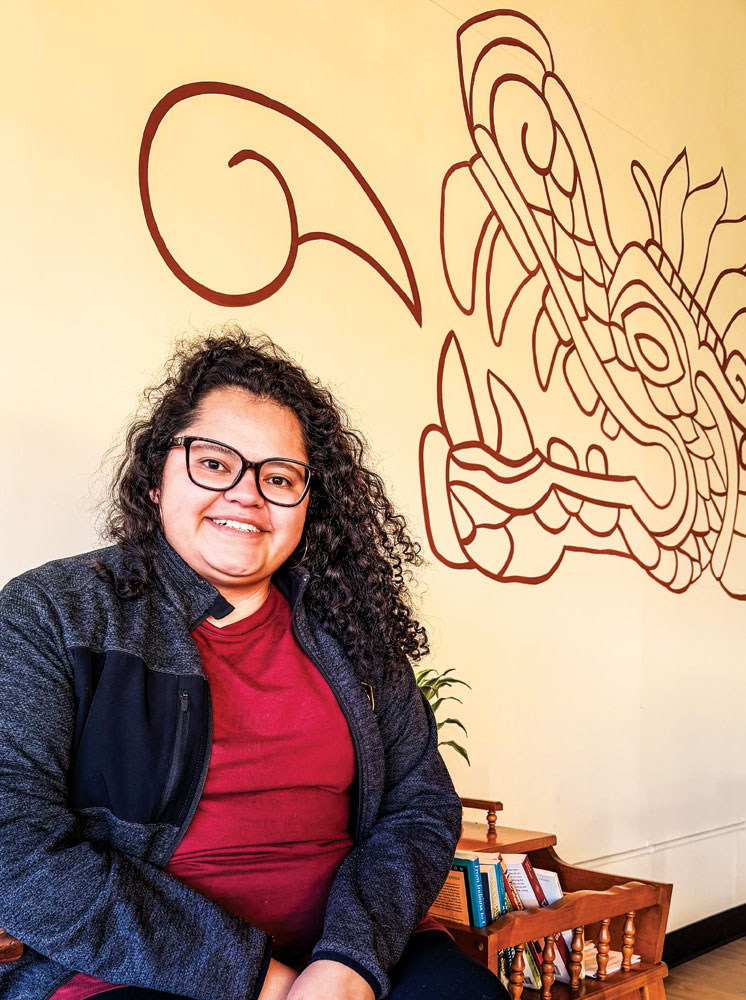
Gianina Horton is ready to help lead the city through change.
Change
“You have a big area, a lot of change, a lot of development, a lot of interest from a variety of different folks. Between the Fitzsimons Innovation Campus, the DDA [Original Aurora’s new Downtown Development Authority], and Mayor Mike Coffman advocating to purchase the Lowry Campus on the Aurora side—that’s all Ward I.
“We could be looking at an immense amount of change over the next several years, so we need to do it right. We need to continue to support small businesses and find ways to keep the dollar circulating within our community. With the DDA now approved and the BRT [Bus Rapid Transit along East Colfax] coming through, there’s a lot of concern about this area becoming prime real estate for developers who are going to be looking at it as an investment opportunity.”
Gentrification
“How do we avoid gentrification or mitigate the immense side effects of gentrification that come with development projects? [How do we avoid having] people who’ve lived here, people who’ve done business here, being kicked out and pushed out, and seeing a complete demographic change and overhaul of the area? That’s something I don’t want for Ward I.
“I also want us as residents, landowners, and businesses owners to conceptualize a part of Aurora, Original Aurora, where we honor its history and legacy and find innovative policies that could bring people in, promote affordability, and keep the diversity that we have here now.”
Working with Other Cities
“I’m really looking forward to having productive relationships with city councils in neighboring cities, so there could be a multifaceted metro approach to affordability and not [be] siloed. I’m grateful that I already have good relationships with a couple council members in Denver, and with the Arapahoe County Democrats being very supportive of candidates in Centennial and Aurora, there are a lot of crossovers. There are better relationships.”
Perception and Image of Aurora
“The [national] narrative push and perception were detrimental in so many ways. One of the things we talked about on the campaign trail was, ‘How do we think through building what a robust economy looks like for Aurora where we’re attracting businesses and reinvesting that dollar back into community?’
“Even before the whole Venezuelan gang takeover conversation, people talk about East Colfax, and people are going to have their thoughts about what the area means. One of the things that I’m excited to take on is hopefully working with Visit Aurora to figure out ways in which we can start shifting the narrative, incentivizing business here, and incentivizing folks to come live here because we are just so rich in so many ways.”
Safety
“Safety is the number one concern across the board, and it does look different for everyone. Some folks want more police officer presence in their communities. Others want officers to respond in a timelier manner. Others, when it comes to safety, especially after high profile shootings in Aurora, [have concerns] centered around police accountability.
“A lot of focus on policing, and especially with the conversation around the DDA, was homelessness and helping folks who are experiencing homelessness find the resources they need. Of course, you always have some who are all for the camping ban and don’t want to see individuals experiencing homelessness around their business or residences.”
Family
“I live with my parents and two of my younger brothers, and I would come home [during the campaign] and say, ‘Guess what happened?’ It was so exciting because my parents, as much as they have become politically aware over the last 10 years, when I was growing up, politics was not a topic that we talked about. It was something abstract. It wasn’t something that reflected who we were. We didn’t see ourselves in elected officials.”
City Council Meetings
“Public comment is one of many avenues that individuals, constituents, regardless of whether they are voters or not, can come in and engage with the council as a whole. And in a time where we’re seeing an erosion of democracy
nationally, the power of our city council to stand firm in the public’s power to engage with their elected officials on issues they’re most passionate about or they’re concerned about is symbolic and greatly needed in this day and age.”
Editor’s note: The new Aurora City Council voted to allow public comments in person for one hour before and one hour after its twice a month Monday meetings. The council’s former conservative majority had voted to restrict public comment.
Showing up
“The commitment that I made to myself as a candidate was how I show up as a candidate. [That’s] how I’m going to show up as the next elected official for Ward I. I need to figure out time management, where I can be present, and allow the community to have realistic expectations of what to expect from me.
“I also realize that there are different groups of individuals with different interests in what creates a city and what creates communities. My reflection of that is learning the things that I don’t know and to show up in spaces where I get to learn and I get to collaborate across different groups.”
Working with Community
“I need Ward I folks to know that we are on the precipice of immense change and what we do now is going to impact us and future Aurora for years to come. We need to be smart about it. We need to be intentional about it.”
Horton says she plans a consistent schedule for town hall meetings, with the first one on Jan. 22 from 6-7:30pm at the Moorehead Rec Center. Topics will include drone usage on Colfax Ave. and a presentation about the Downtown Development Authority (DDA). She said she wants to listen to and work with the community to create a path forward.
The city council role is a part-time position. Horton is also the Racial and Ethnic Disparities Coordinator for the State of Colorado.
She can be reached at ghorton@auroragov.org or 720-477-0917.
0 Comments