

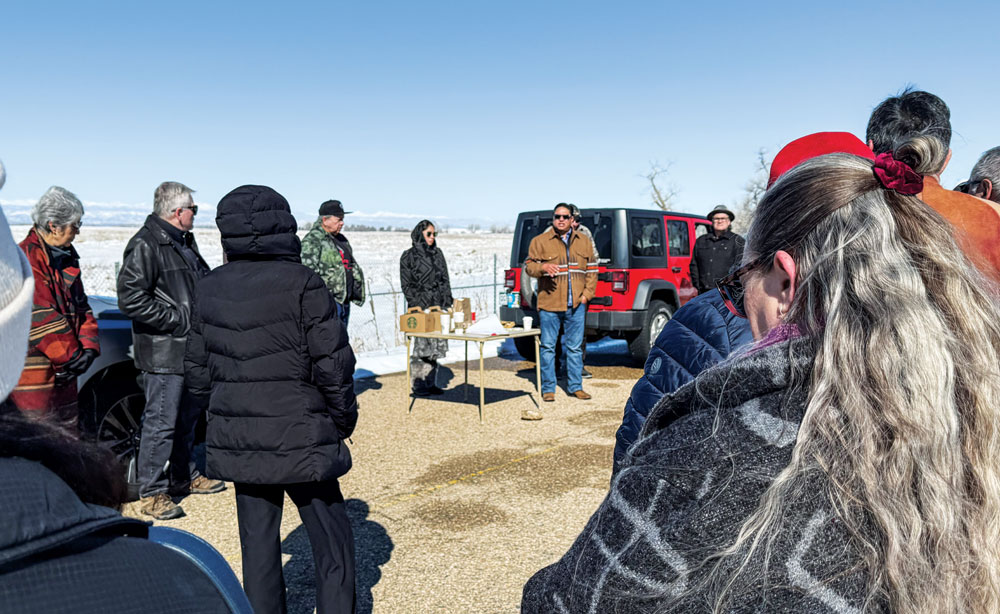
Ernest House Jr. spoke to a gathering at a proposed site for the American Indian Cultural Embassy in Denver. House was recently selected to lead the project. Front Porch photo by Linda Kotsaftis
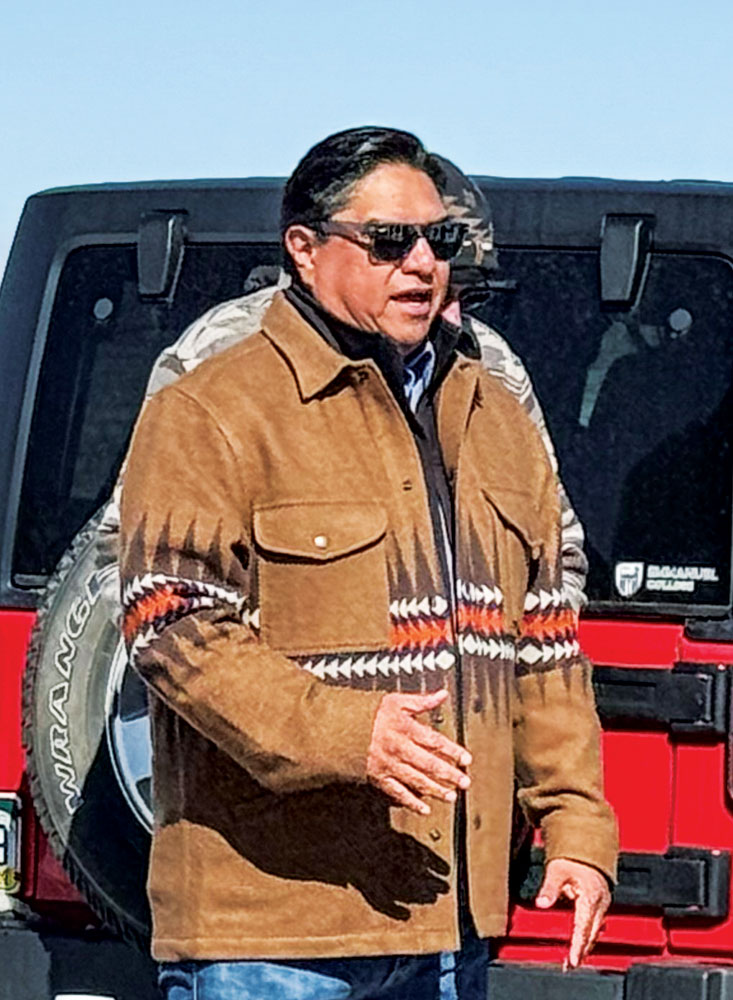
Ernest House Jr. will lead the $20-million project.
Photo by Linda Kotsaftis
On a snowy Saturday, tribal leaders toured a proposed site for a new American Indian Cultural Embassy in northeast Denver. The $20 million project is part of the Vibrant Denver Bond package passed by voters in 2025.
The site, located at the DEN at First Creek Open Space at 5600 Buckley Rd., is adjacent to the Rocky Mountain Arsenal National Wildlife Refuge. The tour in March took place just a few days after Ernest House Jr., director of tribal and Indigenous engagement at the Keystone Policy Center, was named leader of the effort to plan the embassy.
House, a member of the Ute Mountain Tribe, will collaborate with the city and American Indian and Alaska Native community members to guide the next phase of the project. Plans call for the center to be completed in the next six years.
“It can never be one person’s idea,” he told the gathering. “This has to be a collective voice. “That includes the young people, our elders, and especially our tribes. This land was used by so many of our tribal nations for thousands of years.”
House is forming an advisory committee of Native leaders and will hold listening sessions across the area. “I’m very appreciative of the mayor and council members I’ve had a conversation with who all agree that this should not just be Denver-centric. This needs to be regional,” he added.
House agreed the current proposed location is a powerful one as he spoke against a backdrop of snow-covered mountains and blue skies. It was a sentiment shared by Denver City Councilmember Stacie Gilmore, who helped organize the event.
“When we first brought community (members) out here, they said it has to be here,” Gilmore said. “The buffalo are here, and they’re so connected. There’s space to build earthen lodges, sweat lodges, and other ceremonial spaces, and there’s privacy at the location for those uses.”
She added: “We have 61st and Peña nearby. There could be affordable housing for American Indian people built here, right at the A line.”
The 600-acre site under consideration is a former mobile home park that’s now city-owned and managed by the Denver Department of Parks & Recreation. Gilmore said she’d like to see the site put to community use rather than airport or private development.
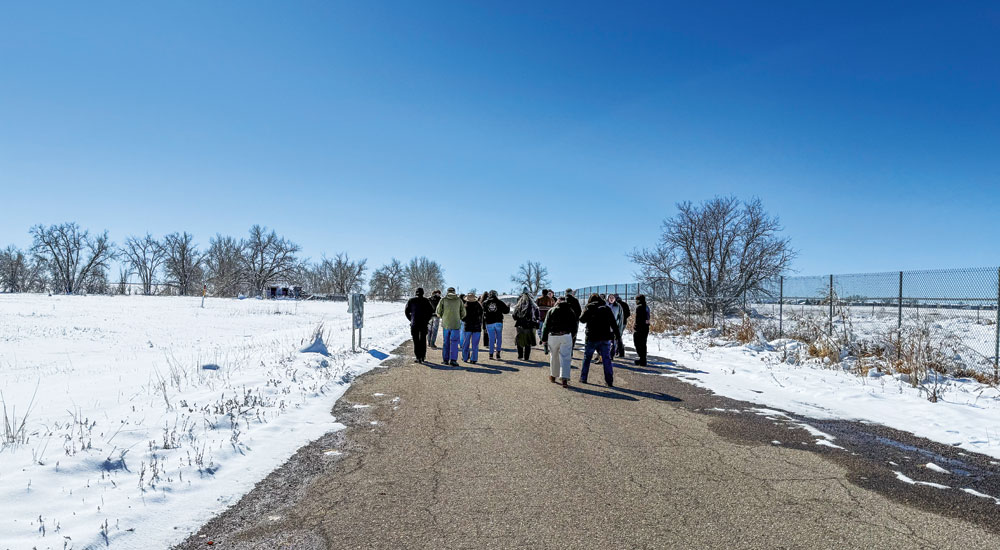
A group of tribal leaders gathered at the DEN at First Creek Open Space in March to tour the 600-acre space being considered for the embassy project. Front Porch photo by Linda Kotsaftis
The idea for the northeast Denver site came from a group of community members meeting for more than a year, first to get the project on the ballot and then to move it forward.
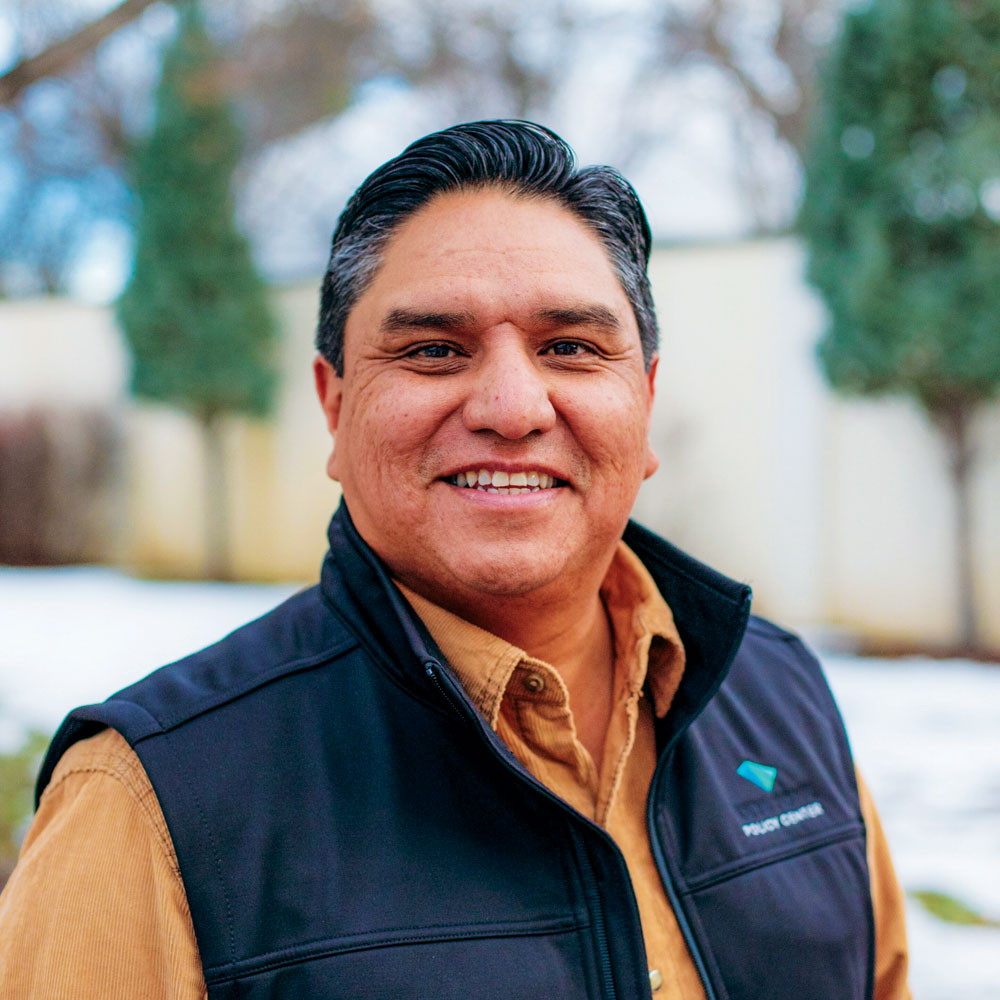
Ernest House Jr., director of tribal and Indigenous engagement at the Keystone Policy Center.
Photo courtesy of the Keystone Policy Center
Teddy McCullough is part of that group. The vision behind the project design, he said, is to have four corners with one part of the site used as a govern- ment area “to bring tribes back, to have a place to operate some government business here, so that people don’t have to go back to Oklahoma or South Dakota to do the business that they need.” Other parts of the site could be used for cultural events and to bring in income, a meeting space for other community members, and a commerce piece.
“The $20 million isn’t going to go too far,” he added. The money includes site identification, design, and construction of the embassy.
House appreciates the work and conversations that have already happened and hopes to now add more voices to the process.
The first listening session was after the tour at a nearby school, where House welcomed input around all aspects of the project, including the name: “Should it even be called an embassy? What is that name? What is that Indigenous name? What does that term mean to you?”
Those answers will come in the months ahead. “One thing that does keep me up at night is the sustainability model of this and what this means moving into the future, not just five years, 20 years, 50 years. I’d love your ideas of what that looks like,” House said.
A survey is available to share ideas for the project https://bit.ly/buffalo11 and visit denvergov.org for more information about ways to engage with the process.

0 Comments