


 The question: Can an eight- minute simulation of dementia help me understand a seven-year journey? I’m not sure I found the answer, but perhaps I gained a better understanding and empathy for what my mom went through during her painful Alzheimer’s journey.
I was eager to take part in the Virtual Dementia Tour event at Balfour Central Park senior living, unsure of what I was in for. Suited with special shoe inserts, oversized gloves, foggy glasses, and a headset filled with unbearable noise, I was led to a room to complete a series of tasks—ones that were difficult to hear when they were assigned to me and even more difficult to remember through the voices talking nonstop in my ears, interrupted by sirens.
As I was guided into a small room, I attempted the tasks—at least the ones I could remember. After first finding a scarf and tying it around my neck, I felt accomplished. Task one was complete.
Not so fast. There was another blaring siren in my ears. The sounds, along with gloves with thumbs and forefingers sewn together, made it both awkward and nearly impossible to write a list of sports. A failed task.
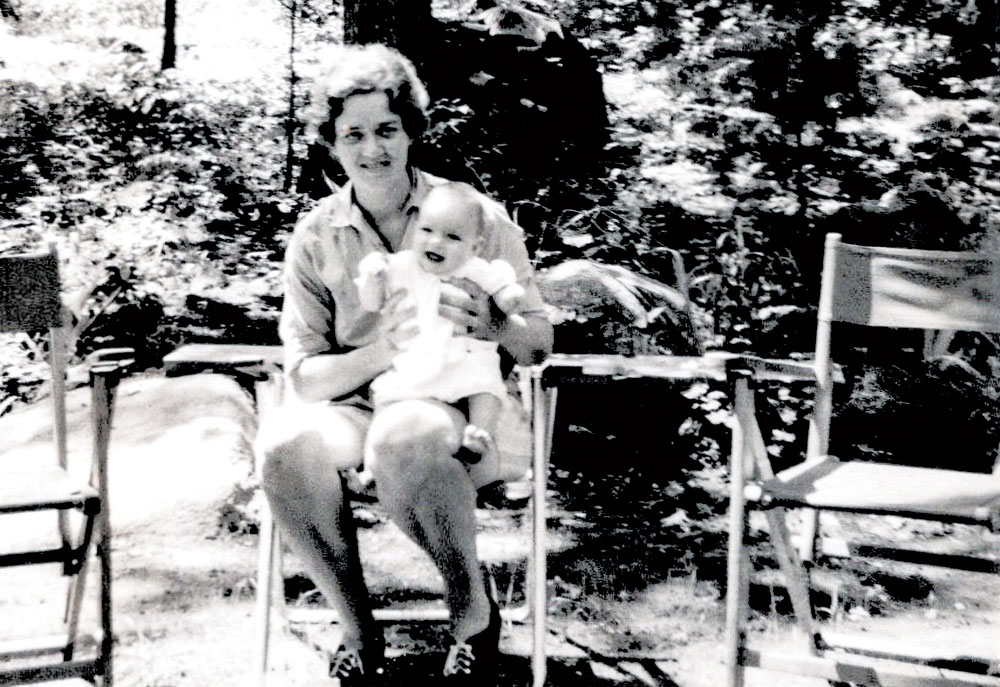
A daughter tries to learn what her mother experienced during her final years. Photo courtesy of Linda Kotsaftis
And stringing together a thread of wooden beads led to complete frustration. Another failure. All with someone standing in the corner watching but unable to answer questions. I felt isolated.
“How was it?” asked Sam Ewig, development director at Balfour, after my eight minutes were finished. “Frustrating,” I answered.
And that’s when the feelings hit me: All the times I was so frustrated with my mother. Why couldn’t she remember? Why would she ask the same questions over and over? I admit I never really understood her frustration, which is in part what my experience at Balfour taught me.
No one chooses to have dementia or all the struggles that come with it. People aren’t forgetting their keys because of a “senior moment.” They’re not forgetting faces and names just to torture their family. That’s just the way it feels in the days, months, and years of watching someone with dementia. We simply want them back to who they were.
There are, of course, several types of dementia and they don’t all involve what the simulation replicates. And there are many different journeys for families filled with waning hope.
My family’s journey ended in May 2020, after seven years of decline for the most important person in my world. As Mother’s Day approaches, I will feel a hole in my heart where that unconditional love used to rest. The person I knew so well was gone years before her death.
What I would give to replace those eight minutes spent in a virtual world of dementia with eight minutes to spend time with my mom again.
Another reminder of that loss came when I got ready to leave. A woman was sitting by herself on a couch knitting a rainbow-colored scarf, wondering out loud if it was getting too long. Should she stop now or keep going? Yes, I told her, keep going.
 I remember a basket of idle knitting needles sitting on the fireplace of my mom’s memory care home—the unfinished projects left behind.
And the people who are left behind, like me, can only hope that others learn to understand dementia better. Maybe an eight-minute experience can help with both understanding and empathy, something we all need more of, especially for those who are living with dementia.
The VDT training is open to anyone. Events are being held at senior facilities and businesses, whether you’re working with patients or not. All Balfour employees go through the training, no matter their position. If you’re interested, contact Sam Ewig via email Sam.Ewig@kiscosl.com or visit secondwind.org for more information.

0 Comments