


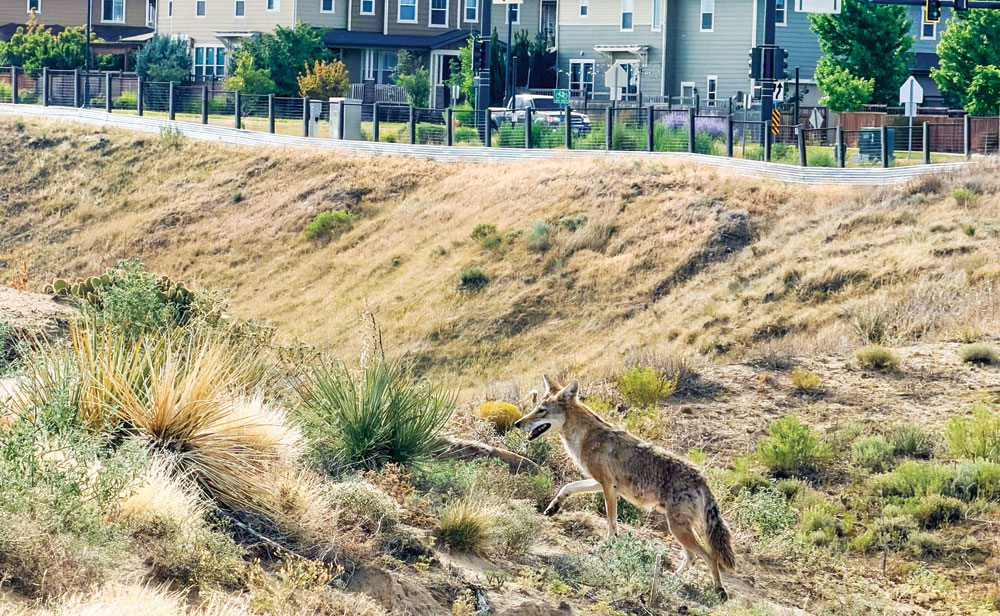
Managing the wide variety of wildlife in Denver can be a balancing act. Front Porch photo by Christie Gosch
Most Denver residents expect to see runners, cyclists, and dogs in area parks. Fewer expect to spot a beaver swimming upstream, a flock of pelicans resting on a neighborhood pond, or a mountain lion slinking through a wildlife corridor.
Yet wildlife is a daily part of life in Denver, according to Vicki Vargas-Madrid, wildlife program manager for Denver Parks and Recreation. “Our parks provide the best habitat for urban wildlife species that there could possibly be. There’s food, water, shelter, and space.”
Managing that wildlife is a balancing act. Vargas-Madrid, who has a degree in wildlife management and ecology, oversees a team that responds to everything from complaints about beaver dams to reports of coyotes, deer, and even a bear moving through the city.
“We try to meet that balance of providing wildlife viewing and wildlife opportunities to our park users but also try to mitigate any people-wildlife conflicts,” she said.
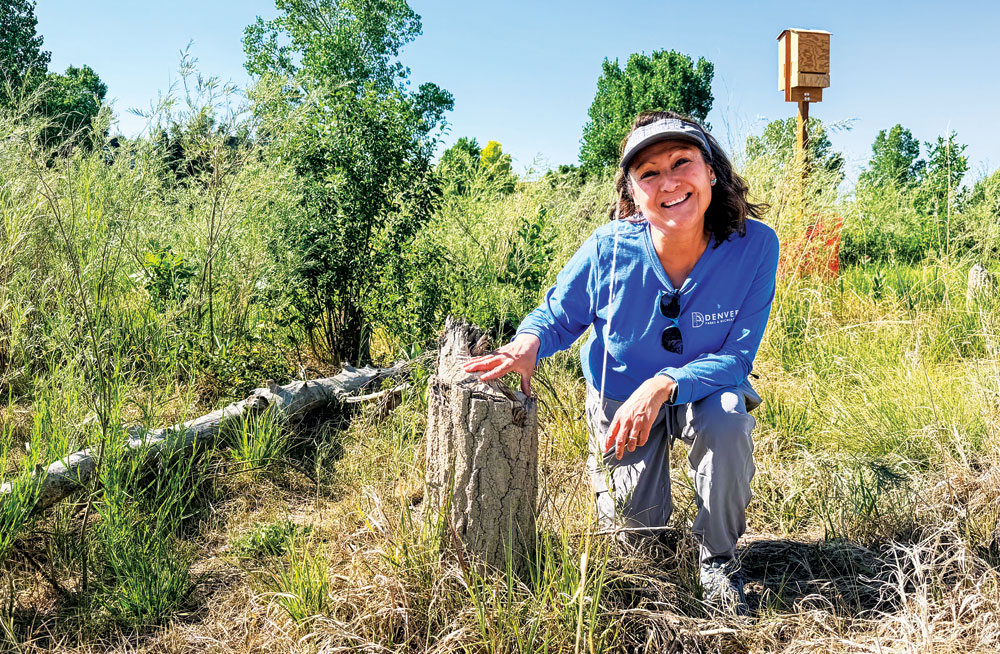
Vicki Vargas-Madrid, wildlife program manager for Denver Parks and Recreation, explained that trees felled by beavers are left on the ground if they aren’t impeding walkability. The trees continue to be a food source for different animals and keep beavers from chewing down more trees. Front Porch photo by Christie Gosch
The Dam Builders of Denver
One of the most visible examples is Denver’s growing beaver population.
The industrious rodents can inspire admiration and frustration in equal measure. Some residents celebrate seeing beaver lodges and dams along local creeks, while others worry about chewed trees or potential flooding.
When complaints come in, each situation is carefully evaluated.
“Public safety is always our first primary concern,” Vargas-Madrid said. “If there’s no damage that is causing a public safety issue, then we try to let nature take its course.”
Rather than removing beavers, the city often protects select trees using a mixture of paint and sand. The gritty coating discourages chewing and can remain effective for several years. Young trees may also be protected with wire cages.
“We don’t paint every tree in a corridor,” Vargas-Madrid said. “We pick and choose certain trees that we want to protect.” In some cases, beavers may even help restore native ecosystems by removing invasive tree species.
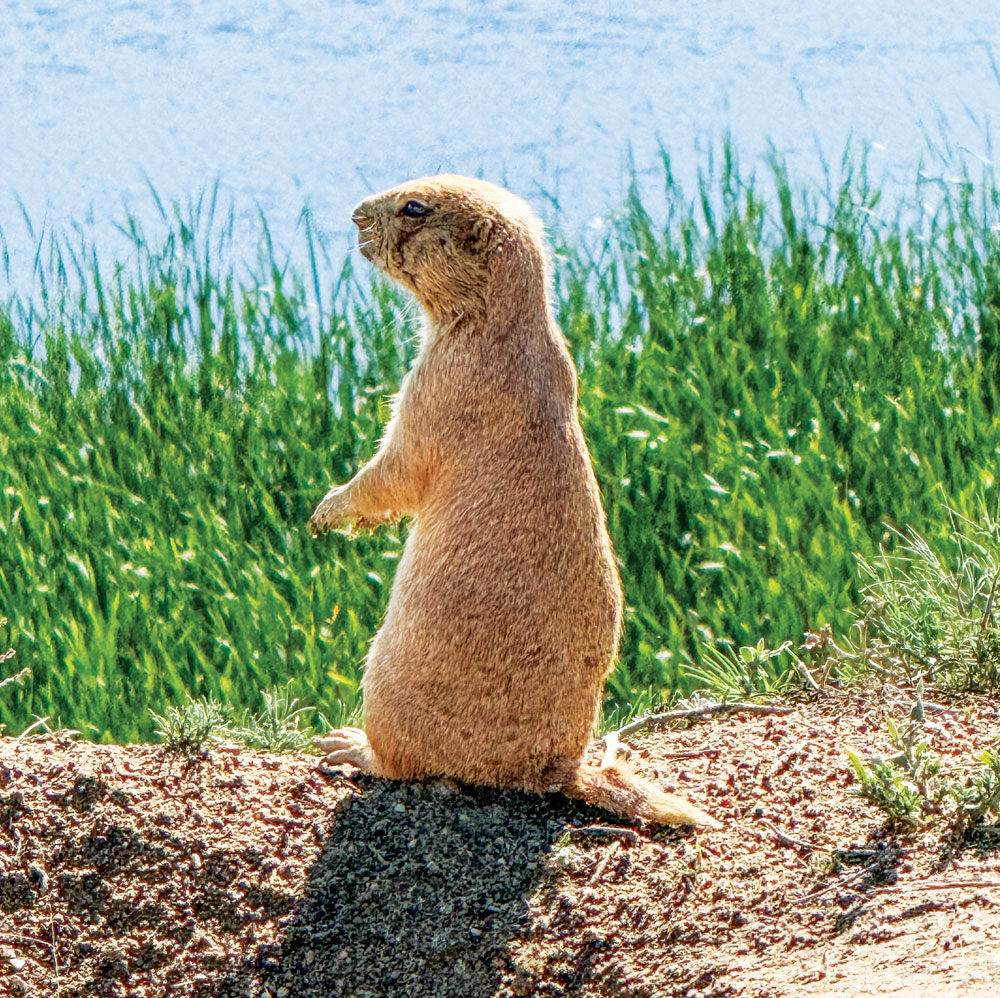 A Keystone Species in the City
Although beavers often steal the spotlight, they are far from the only wildlife thriving in the city.
Prairie dogs remain a critical part of Denver’s urban ecosystem. Their colonies provide food for coyotes, red foxes, hawks, eagles, and other predators. “Prairie dogs are a great food source for a lot of other wildlife,” Vargas-Madrid said.
Denver manages several prairie dog colonies in open spaces and works closely with other wildlife agencies to evaluate management strategies. For instance, black-footed ferrets that were reintroduced into the Rocky Mountain Arsenal National Wildlife Refuge travel back and forth between federal land and nearby open space called First Creek at DEN. “The arsenal tracks their black-footed ferrets, and they know that they have gone over to our space and use our colonies,” Vargas-Madrid said.
Sometimes that shared habitat can be more worrisome. In 2019, the U.S. Fish and Wildlife Service found fleas living in the arsenal’s prairie dog colonies were infected with bubonic plague bacteria. Federal officials ultimately used insecticide on the fleas and worked with city officials to close the wildlife areas until the bacteria was eliminated.

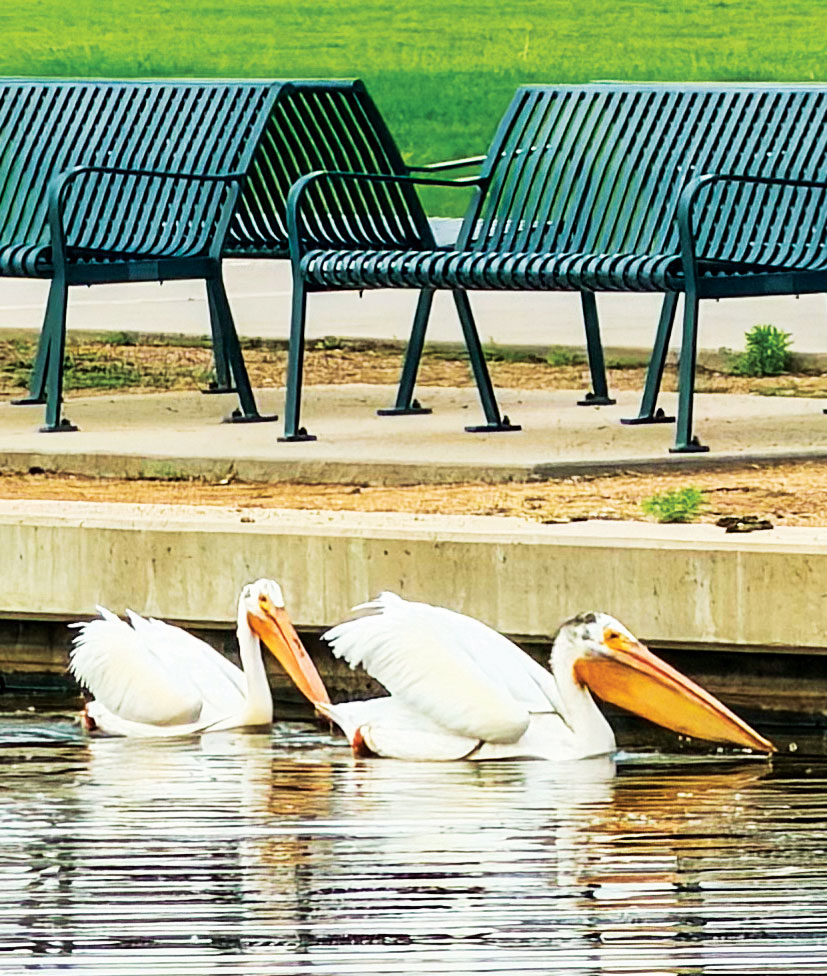 Just Passing Through
Bird lovers may be surprised by the diversity of species that move through Denver.
This time of year, American white pelicans can be seen resting on ponds throughout the city. Vargas-Madrid recently counted 10 pelicans gathered at Parkfield Lake Park.
Elsewhere, a cormorant rookery at Duck Lake near City Park hosts nesting birds each spring and summer. In Central Park, egrets, herons, and hawks are common. And this spring, wild turkeys were spotted walking throughout northeast Denver.
Bats also play an important role, as they help control mosquito populations by consuming large quantities of insects. It’s one reason that park officials work with volunteers to hang bat boxes. “A big complaint that we do get from many residents is mosquitoes,” Vargas-Madrid said. “Bats eat insects, and they eat a lot of them.”
Denver’s wildlife corridors can also serve as highways for larger animals. Deer frequently move through riparian areas, and reports of elk, black bears, and even mountain lions occasionally surface. Most don’t stay long.
“These are species that end up here using these riparian corridors,” Vargas-Madrid said. “They just keep moving.”
Changing Climate Impacts Wildlife
Like many Western cities, Denver is seeing signs of environmental change. Vargas-Madrid said prolonged drought has affected some habitats, including Huston Lake in southwest Denver, which dried up completely this year. As the lake disappeared, residents reported stranded turtles and a fish die-off. “Other wildlife that have depended on that location for so many years is gone,” she said. “They’re probably relocating to other parts of the city.”
For Vargas-Madrid, education remains one of the most important parts of the job.
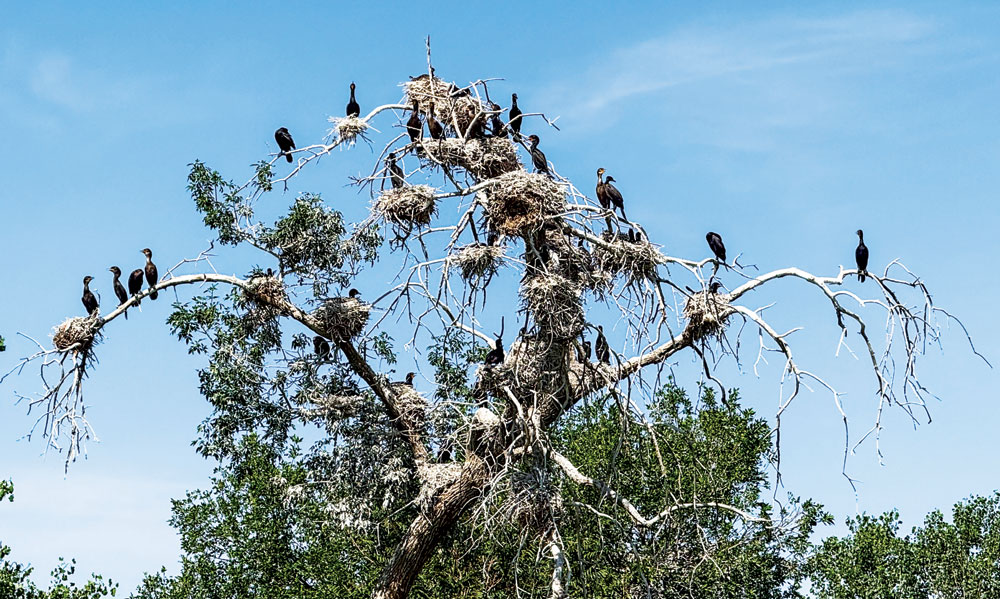
At Duck Lake inside Denver’s City Park, trees teemed with cormorants. The birds make their summer home here and have built dozens of nests. Front Porch photo by Linda Kotsaftis
Many residents are surprised to learn how much wildlife shares their city. Her message is simple: appreciate the various wildlife species but give them space.
“When you see a coyote in the middle of a field, enjoy it,” she said. “Take a picture from afar. Don’t try to feed it. Don’t try to befriend it.”

Great article. I’ll be looking for beavers and pelicans on my next walk through the park.