


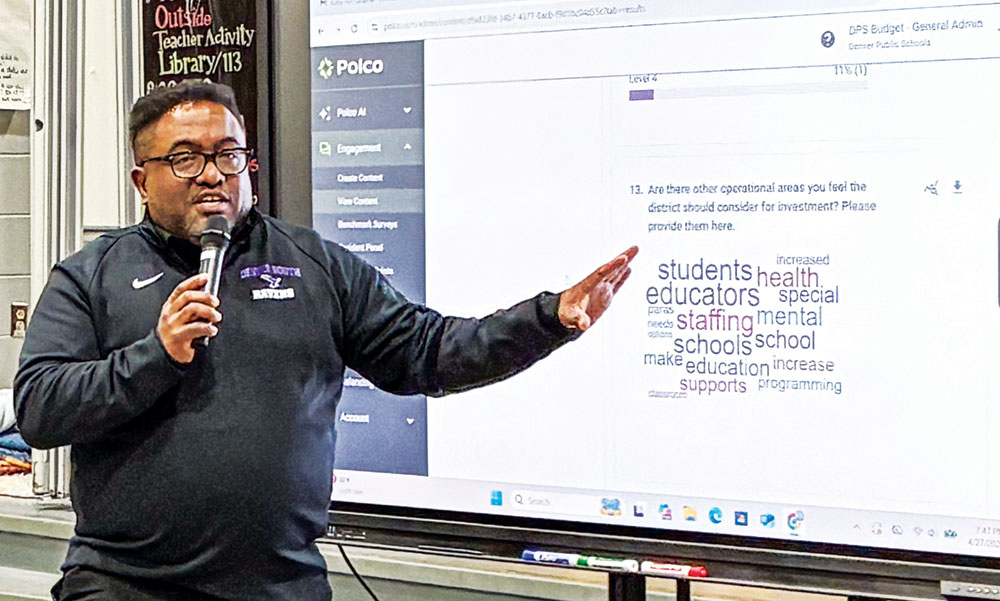
Vernon Jones Jr., a member of the DPS Mill Levy Override Advisory Committee, answered questions about the tax proposal at a community meeting at Westerly Creek Elementary School.
At a series of six community meetings in May, Denver Public School officials sought public input on a proposed tax measure designed to address a growing gap in school funding. Chuck Carpenter, DPS chief finance officer, said declining enrollment, reduced federal support, and a tightened state budget are putting increased pressure on district finances.
This fall, he hopes voters will approve a $44 million mill levy override to give more money to teachers or programs or both. He said if the measure passes, the average homeowner would pay about $71 more a year. Although DPS salaries are some of the highest in the state, Carpenter said it’s still not enough. “We have kept up with inflation at DPS.” He continued, “Two of the biggest costs, housing and healthcare, have been skyrocketing since 2015. It does make it hard to attract and retain excellent educators in our classrooms.”
DPS officials have identified five priorities that revenue from a mill levy could be used for: salary increases for all staff, additional incentives for teachers that work at high-poverty schools, more money for teachers in hard-to-fill positions, reduction in health insurance premiums, or funding for programming at career and technical hubs.
Ultimately, a DPS-appointed committee of teachers, parents, administrators, and community leaders will create a proposal for how the funding should be allocated. That plan will be presented to the school board in June. In August, school board members will decide whether to put the measure on the fall ballot for voters to decide.
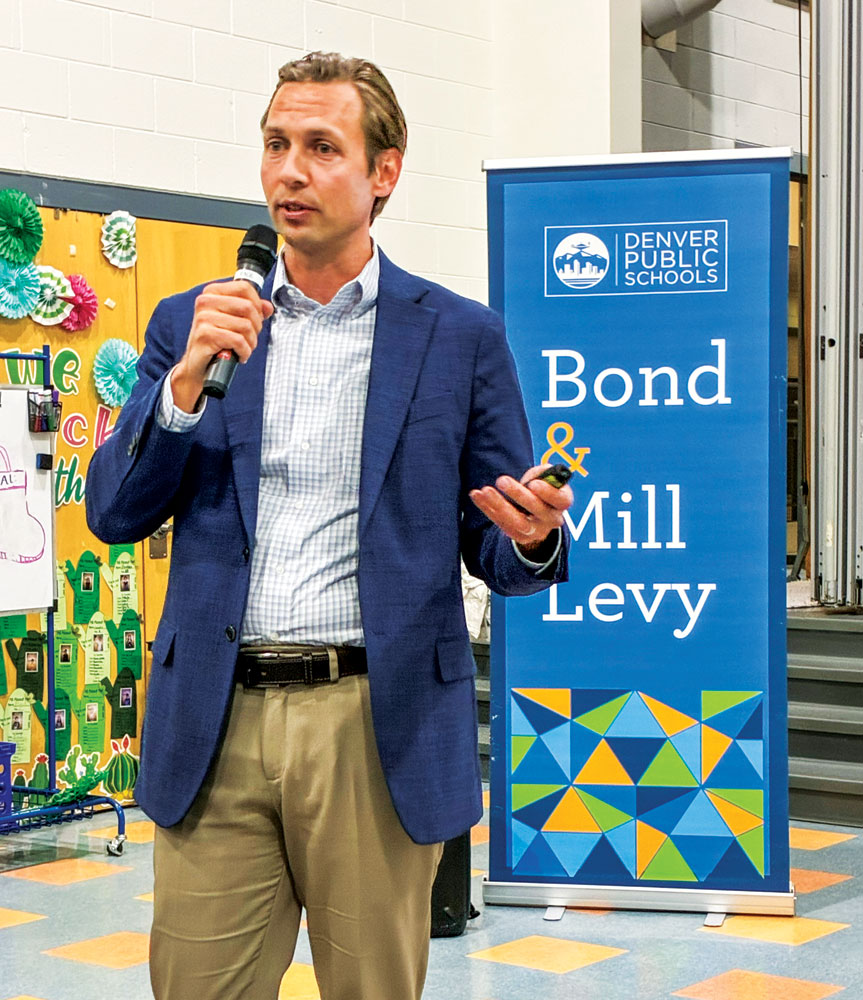
DPS Finance Chief Chuck Carpenter said he hopes voters will support increased school funding this fall.
After a community meeting held at Westerly Creek Elementary School, principal Jill Corcoran said she supported any proposal that gives more money to teachers. “When I have teachers that can’t afford to live in Denver, that’s a problem,” she said. “I’m hearing from a lot of our staff that healthcare is out of reach for their families, so if this can do anything to help them, I 100% support it.”
Emily Aronow, a parent of a kindergartner at Isabella Bird Community School, said she would rather see money go to hiring additional paraprofessionals in the classrooms. “My son has 28 kids in his class and only one teacher and no para. She does a great job of classroom management, but they aren’t getting individualized instruction,” she said. “I’m disheartened that they (DPS officials) didn’t have ‘adding more staff’ as a priority. I worry that they’ve made up their minds.”
Carpenter said it’s a tough tradeoff. “We’re a large organization. We have almost 12,000 employees. We have 150 district-managed schools and 200 schools when you add charters. If you add one additional person at every school, you’re talking $20 million. That’s a hard decision.”
Russ Ramsey, a Central Park parent who is serving on the Mill Levy Override Committee, attended the DPS meetings and was pleased with the community engagement. He said he knows people have differing priorities “about class size, staffing ratios, access to specialists, and that kind of thing.” He added, “The committee will have to wrestle with all of that.”
Ramsey said he believes the feedback, from the community meetings and an online survey, will be an important part of deliberations both by the committee and the school board. “The superintendent has said he’s taking these recommendations seriously.”
To learn more about the mill levy proposal, visit bond.dpsk12.org/page/mill-levy-override-proposal.
Photos by Mary Jo Brooks

0 Comments