

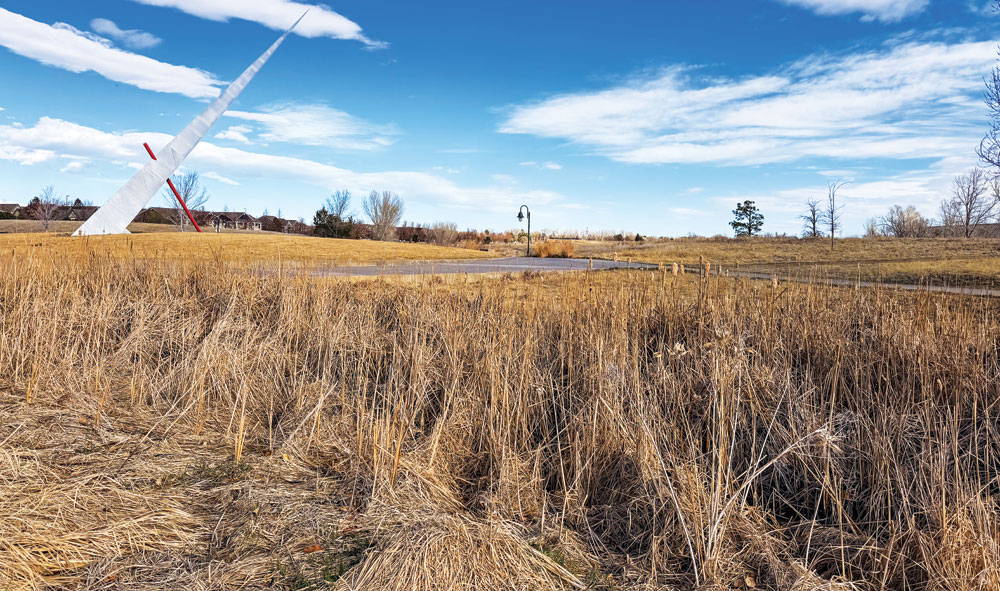
Tall, dry grasses in urban open spaces could fuel wildfires this summer. Front Porch photo by Christie Gosch
Denver’s unusually warm and dry winter has many people worried about the potential for drought and fire danger this summer. At a recent meeting of Lowry United Neighborhoods, Denver Fire Chief Desmond Fulton and Denver Water’s Bea Stratton briefed residents on current conditions and shared tips for how to prepare for the spring and summer months.
Chief Fulton acknowledged that a destructive wildfire in urban open space is a very real possibility, and he reminded residents of the devastating Marshall Fire in 2021 that forced the evacuation of 37,500 people and destroyed more than 1,000 structures in Boulder County. “Those are fair concerns. We have one of the driest seasons on record, so we want to ensure that people are aware of the risks and have plans in place,” Fulton said.
He assured the audience that his firefighters are continually training and planning for all emergencies, with 200 specially trained to fight wildfires. Still, Fulton said homeowners should take steps to reduce fire risks around their properties. That includes trimming tree branches and shrubs so they don’t touch the house and clearing leaves and dead pine needles from gutters. “Call Xcel if you have trees touching power lines. Xcel will come and trim them for you,” he said.
Fulton also said homeowners should create a home inventory of personal possessions and regularly check their home insurance policies to make sure coverage is adequate. Those documents, along with any other important papers, should be placed in a fireproof safe or a safety deposit box in a bank.
Finally, he urged people to have an evacuation plan: “Have a to-go bag with the things you need if you get a reverse 9-1-1 call that tells you to immediately evacuate.” Included in the bag should be necessary prescription drugs. He said residents should plan at least two ways to get out of their neighborhood, in case some roads are blocked during an emergency.
Denver Water Urges Conservation as Drought Conditions Loom
While wildfire risks are one concern, water officials are also preparing for drought conditions. Stratton said Denver Water is already encouraging residents to start thinking about conservation and urging homeowners to wait to turn on sprinklers until mid-to-late May.
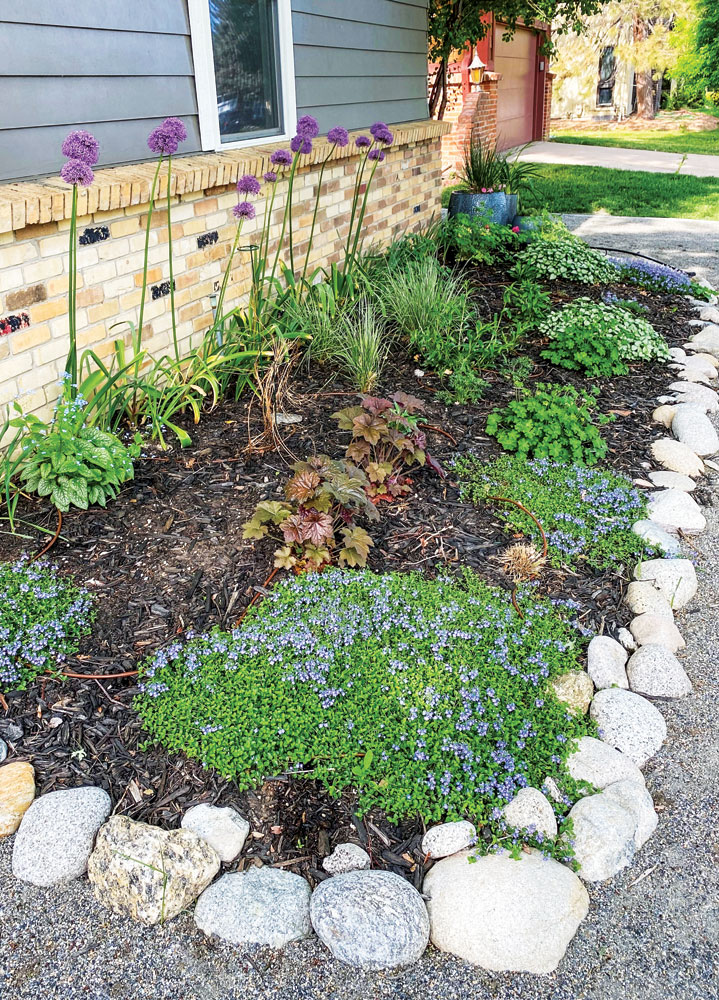
Denver Water sells “Garden in a Box” kits to make
Coloradoscaping easier. Photo courtesy of Denver Water
Single-family homes account for about 47% of Denver’s water use, she said, and roughly half of that goes toward outdoor watering. “That’s an eye-opening statistic,” said Stratton. A major contributor is Kentucky bluegrass, a non-native turfgrass that requires significant amounts of water to survive.
On March 25, Denver Board of Water Commissioners adopted a resolution declaring a Stage 1 drought, which hasn’t happened since 2013. That declaration restricts outdoor watering to two days a week.
To address long-term water use, Denver Water has spent the past four years building programs that encourage residents to replace water-thirsty landscaping with native plants. The effort is part of an agreement with the Bureau of Reclamation to replace 30% of nonfunctional turf grass across the city.
Stratton was quick to explain this doesn’t mean getting rid of soccer fields, sports areas in parks, or backyard lawns where children play. Non-functional turf refers to areas that aren’t actively used, such as medians and curb strips. “This is not a war on turf. This is trying to be intentional about planting and putting the right plant in the right place,” she said.
The term “xeriscape” was coined by the Denver Water Department in 1981, but Stratton said it has often been misunderstood as replacing grass with decorative rocks. “People thought it was ‘zero-scaping,’ but that’s not at all what we want to promote,” she noted. Instead, Denver Water encourages residents to create what it calls Coloradoscapes—yards filled with native, water-wise plants. “We’re talking about diverse landscapes that are colorful, textural. They create wildlife habitat, attract pollinators, and increase soil health. They look far more interesting than Kentucky bluegrass,” she said.
To help homeowners make this transformation, Denver Water offers a series of free workshops and classes. It also provides free native grass seed and sells affordable “Garden in a Box” kits that provide the plants and instructions for a Coloradoscape garden. In addition, Denver Water has created a 60-page do-it-yourself guide to creating a waterwise landscape.
For more information, search “Coloradoscaping” at denverwater.org.
0 Comments