


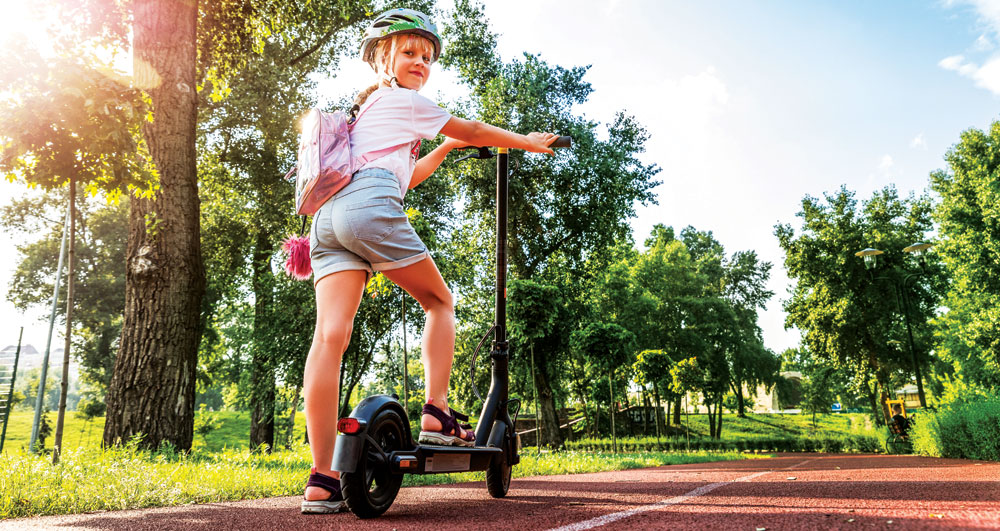
Children’s Hospital reported a rise in injuries connected with e-bikes and e-scooters. Adobe Stock image
The freedoms of summer directly correlate with a busy season in the emergency room at Children’s Hospital Colorado.
This year, alongside warm weather concerns around water safety, the use of e-bikes and e-scooters by youth has resulted in an unprecedented uptick in serious injuries.

Dr. Maria Mandt
Data from the hospital’s trauma registry reveals a 184% rise in traumatic injuries related to e-bikes and an 84% increase in e-scooter injuries from 2024 to 2025. “So many of these feel so preventable if we had different family habits, personal habits, and legislative pieces in place to keep our kids safer,” said Dr. Maria Mandt, medical director of the emergency medical services and critical care transport at Children’s Colorado.

Alicia Melven
Alicia Melven, an injury prevention and outreach specialist at Children’s Colorado, added, “E-bikes and e-scooters aren’t inherently good or bad. They’re convenient, affordable, and great ways for kids and teens to get around. But vehicle speeds run the risk of more severe injuries.”
Last year, 62 pediatric e-bike and e-scooter incidents required evaluation by a trauma surgeon at Children’s Colorado. Of those cases, 32% involved a motor vehicle, and 13% resulted in severe trauma. Only two patients with life-altering injuries were wearing helmets.
With e-bikes, Mandt said, “we see significant traumatic brain injuries. We see a lot of facial injuries and neck injuries, too, because they land leading with their heads.”
Freedom and Risk
Parents who want their children to enjoy the practical mobility provided by e-bikes and e-scooters can minimize risks by “having a plan,” Melven said. She compared giving a child an e-bike to handing over car keys. “When we let them ride devices that go 20 to 28 miles an hour, we should be teaching them how to be in traffic safely,” she added.
For Kimberly, a northeast Denver parent who asked that her last name not to be used, an e-bike was her son’s ticket to middle school freedom. “They benefit us as parents. We were driving him everywhere,” she recalled.
After her son purchased an e-bike, he spent more time outdoors, exploring the community and meeting friends. She insisted he wear a helmet and follow the rules of the road.
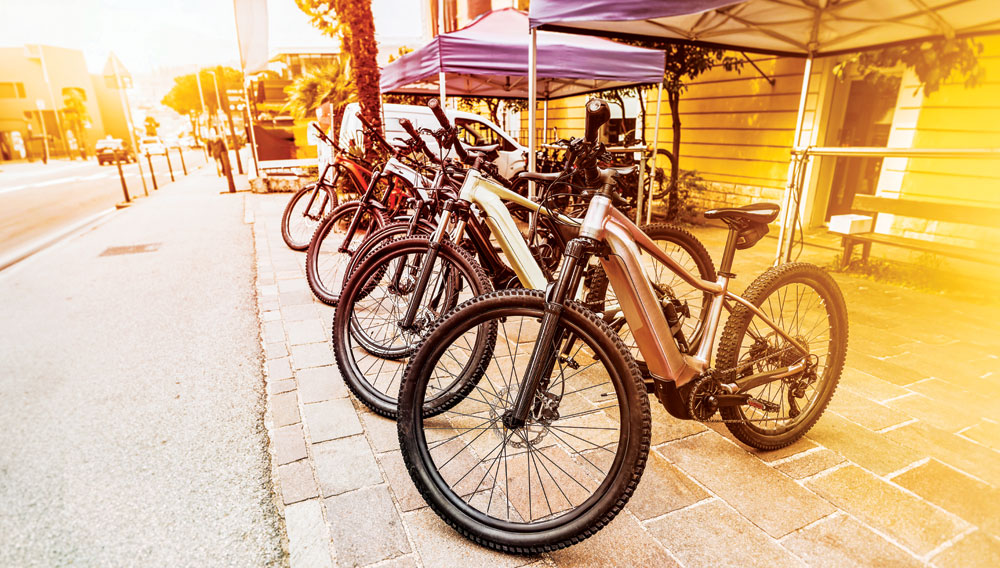
With more youth enjoying the mobility provided by e-devices, Children’s Hospital noted a 184% spike in traumatic injuries related to e-bikes and an 84% increase in e-scooter injuries last year. Adobe Stock photo
Kimberly’s experience illustrates how quickly the rules and risks around riding an e-bike can become complex. When her son upgraded his e-bike, he was able to travel farther and faster—but the new bike was illegal for him to operate in Colorado at his then-age.
“We told him he could learn from the consequences,” she said. Her son was stopped twice by police, costing the family about $500 in court and additional fees. He is hoping to sell his bike in favor of a car.
In Colorado, Class 1 and Class 2 e-bikes are limited to 20 mph and are permitted on multi-use paths. Although there is no state-mandated age limit for these bikes, the Consumer Product Safety Commission recommends children under age 12 do not operate an e-bike. The American Academy of Pediatrics suggests waiting until age 16. “Young children don’t have the coordination, the experience, or the judgment to handle faster moving e-bikes and e-scooters,” Mandt said.
Speedier Class 3 e-bikes are restricted to on-street bike lanes and roadways. Class 3 riders must be at least 16 years old.
Certain behaviors escalate the risk of riding an e-bike. “Doing tricks and wheelies and having another person on that bike is only going to increase the wobble effect and increase your risk for injury,” Mandt said.
For head protection, Melven recommended e-riders wear helmets certified to the Dutch NTA 8776 standard, which are rated for speeds up to 30 mph and protect the face and chin.
Water Safety: The Relentless Summer Hazard
Even as e-bike injuries spike, the traditional summer hazard of drowning remains a persistent threat. Mandt said.
She worries most about toddlers, who are most likely to drown in a home pool or bathtub, and about teenagers when they are near large open bodies of water. Teenage drownings are linked with impulsive behaviors, overestimating personal swimming skills, underestimating environmental dangers, and experimentation with alcohol or drugs.
Swimming lessons are helpful for all ages, Mandt said, yet “parents should never assume their child is drown-proof.” She urged caregivers to receive CPR training, which significantly improves survival rates.
“If there’s a take-home point for parents this summer, it’s one word: supervision,” Melven said. “Supervision means checking playground equipment for hazards. It means staying within arm’s length at the pool. And with e-bikes, it means actively communicating, knowing where your teen is going, and making sure they never leave the house without the right helmet.”

0 Comments