

Community Leaders Ask for Transparency
At a news conference in northwest Aurora in June, members of the Grassroots Leadership Council (GLC) asked for a stronger voice in the process of development and changes in the area along East Colfax Avenue.
The GLC, comprised of the East Colfax Community Collective (ECCC), Food Justice Northwest Aurora, and Street Fraternity, “fights for solutions to problems in our community, and is committed to defending our neighborhoods over time,” said Nate Kassa of the ECCC.
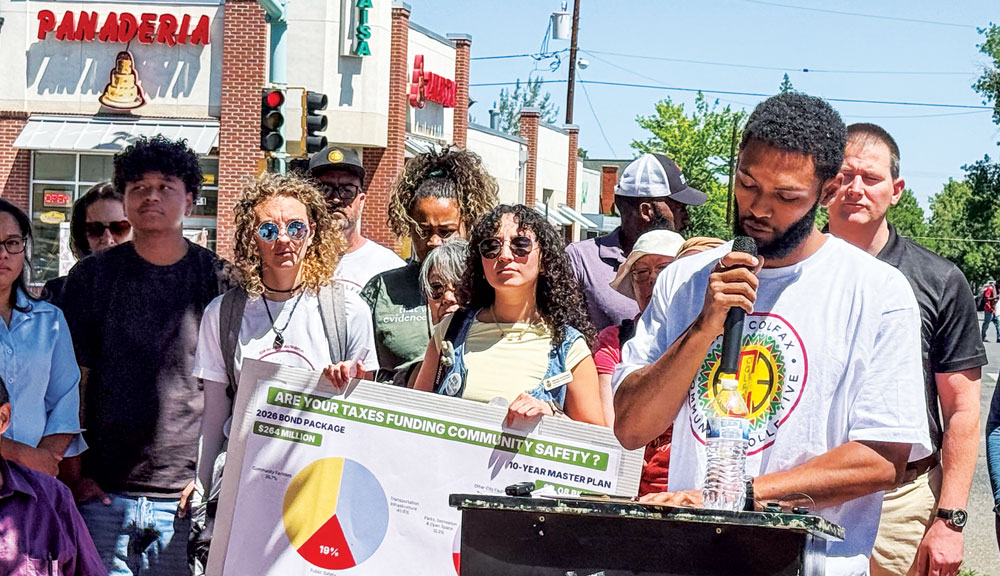
Nate Kassa from the Easy Colfax Community Collective spoke at the news conference with other Grassroots Leadership Council members. Front Porch photo by Linda Kotsaftis
GLC is concerned about not having a voice in the Downtown Development Authority and the work of the DDA board moving forward.
Kassa pointed to a city retail strategy he said would bring in businesses that would push out smaller locally owned ones, as well as upcoming ballot measures with money earmarked in part for Aurora Police Department facilities.
“With all these major things upcoming, we need to see the community’s priorities be put into actions and not just words,” Kassa said before leading a chant of “Whose community? Our community.”
Community priorities include access to basic goods and services, supporting small business, housing conditions, and affordability.
Jason Romero, a small business owner in the area, is one of the co-founders of Ollin Cafetzin coffee shop. He said East Colfax doesn’t need “development that markets our culture while pushing our communities out. We need repair, we need protection, we need ownership, we need a DDA and a retail strategy that does not just hear the community but acts on behalf of the community.”
Caitlin Matthews, executive director of Food Justice Northwest Aurora, echoed the call for the DDA board to invest in and support small businesses.
“We are here today to state loudly and clearly that northwest Aurora is not a blank slate; it is a community worth preserving, and we are not waiting for outside investors and developers to come in to erase the true diversity that we already have here and replace it with a facade of northwest Aurora’s character,” she added.
Matthews said the DDA has an opportunity to “invest in northwest Aurora’s vibrant business community, such as the two dozen small food markets along the Colfax corridor that will fight to stay here.”
The DDA is part of the Colfax Vision and Action Plan for the area. Board members will be tasked with overseeing projects and investments under the authority and ensuring community members and businesses are involved and that their needs are met throughout the process. The GLC wants to make sure that happens.
Denver Seeks Input on 20-Year Vision for Near Northeast Neighborhoods
This summer, Denver kicked off the official public engagement process for the Near Northeast Area Plan. This blueprint will guide city priorities for the Clayton, Cole, North Park Hill, Northeast Park Hill, and Skyland neighborhoods for the next 20 years.
Bryan Botello, senior city planner, told community members gathered at the Clayton Early Learning Campus that the city planned to gather feedback from residents about improvements they would like to see in their neighborhoods. In addition to community meetings and pop-up booths at public events, the city has created an online survey where residents can give feedback. (Search Near Northeast Area Plan on denvergov.org.)
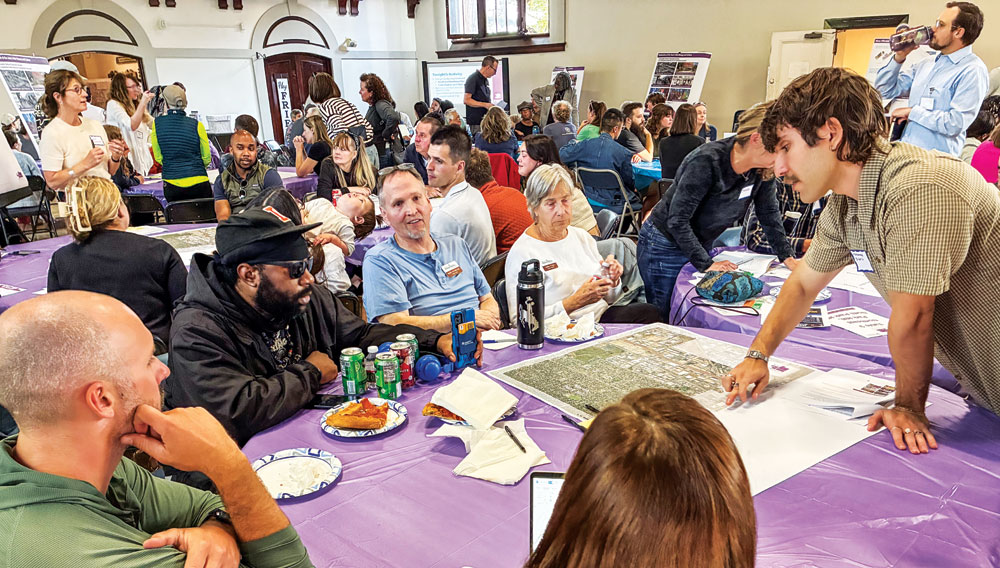
Residents gathered around neighborhood maps to learn about the city’s priorities for the area and to provide feedback. Photo by Mary Jo Brooks
Botello said the five diverse neighborhoods include 13,000 households with a median household income of $100,000. He added that the area plays “an important part in the history of the city of equality, desegregation, and Black opportunity.” He said in recent years, there have been significant demographic changes, so one priority is “how can we celebrate and preserve that history and culture and ensure that folks maintain a sense of belonging?”
Members of the city’s planning department have identified five potential priorities after initial meetings with community groups. Those priorities are maintaining the history and culture of the area, increasing affordable housing options, providing more food and retail options, improving traffic and pedestrian safety, and improving the health and wellbeing of residents in the area.
After brief remarks from Botello and Denver City Council members Shontel Lewis and Darrell Watson, community members gathered around maps to talk with facilitators about those priorities and additional issues they wanted to see addressed.
Resident Kevin Chesley said he thought there was already enough affordable housing in the area, but he said there was a shortage of retail options. “There’s a real lack of amenities in North Park Hill compared to South Park Hill. I don’t understand why there’s that discrepancy.”
Morgan Holmquist said she’d like to see more to be done to spruce up the neighborhood“ There’s a lot of trash and broken glass everywhere. And there are no trees, no shade,” she said. “It feels like we’re a forgotten neighborhood.”
Botello said his department will sort through the suggestions this fall and come back to the community with a draft framework at the beginning of 2027 to get more feedback before presenting a plan to City Council for adoption. Botello said the entire process is expected to take approximately 18 months.
End-of-Session Town Hall
A meeting at the Hiawatha Davis Jr. Recreation Center in Park Hill was an opportunity for residents to hear about accomplishments and challenges in the 2026 legislative session from state Rep. Lindsay Gilchrist, state Senate President James Coleman, and state Sen. Matt Ball, all Democrats.
“We came in this year with a nearly billion-dollar budget deficit, as we did the year before.” Coleman said. “We always find our way to balancing our budget.”
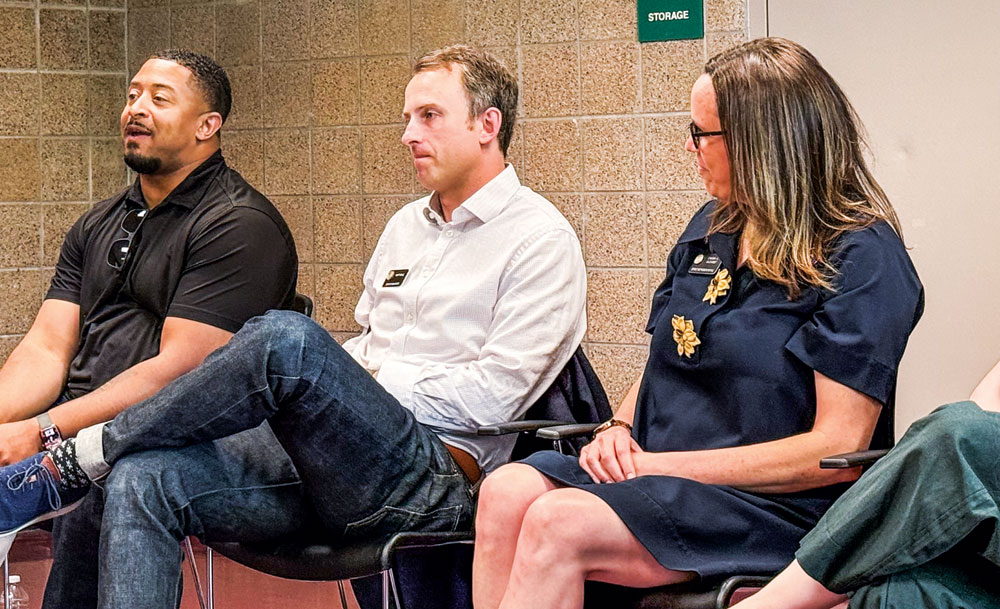
(Left to right) State Senate President James Coleman, state Sen. Matt Ball, and state Rep. Lindsay Gilchrist hosted an end-of-session town hall. Front Porch photo by Linda Kotsaftis
Despite the challenge and cuts across the state, Coleman said there were no cuts made to K–12 education, core Medicaid services, and public safety.
Coleman added that of the 400-plus bills passed, a lot of those have to do with affordability, health care, and transportation.
Ball also highlighted the passage of online sports betting regulations and geothermal energy investments, while Gilchrist emphasized criminal justice reforms, mental health expansion, and Medicaid regulation.
She applauded the residents who showed up to learn more about local government. “You all who give me hope that you show up on a Saturday where you could be anywhere else, and you’re here because we know that we are in charge of our democracy.”
She encouraged people to spend this time in the off session to reach out at the following email addresses and suggest bill ideas for the 2027 session that begins in January: lindsay.gilchrist.house@coleg.gov, james.coleman.senate@coleg.gov, and matt.ball.senate@coleg.gov.
For more information about bills passed, visit leg.colorado.gov.

Fresh produce is available from local growers at a new market. Front Porch photo by Linda Kotsaftis
A New Market Provides Fresh Locally Grown Produce and More
Inside a storefront at 10255 E. 25th Ave., a new market is open for the community to access fresh produce and local goods with a pay-as-you-can model.
The farmer’s market Rebel Marketplace operates inside the space known as Urban Symbiosis, a nonprofit with the mission of “building a model for a fair and sovereign food system, rooted in community.”
Inside, customers will find produce from local gardeners and urban farmers, most of it seasonal.
There are also house plants, local teas, mushrooms, and soaps. Many of the vendors are from the weekly Rebel Marketplace at Del Mar Parkway in Aurora every first and third Saturday through October.
As of publication time, the northwest storefront market was open on Sunday from 10am–1pm and on Monday and Tuesday from 10am–7pm.


A new veterinary clinic for cats is scheduled to open inside Stanley Marketplace in August.
CatsOnly Veterinary Services Coming to Stanley Marketplace
A plan to open a cats-only veterinary clinic at Stanley Marketplace advanced without public comment during a hearing before the Aurora Planning and Zoning Commission.
No neighbors signed up to comment during the meeting in May, which was before the Aurora Planning and Zoning Commission. The vote on the proposal that allows a property owner to use their land for a purpose not normally permitted in that specific zoning district was open to the public.
A commissioner stated the clinic owners had submitted a plan that addressed concerns about the business: Animal and patron safety are resolved through a required carrier policy and providing rental carriers to prospective patients, and a double door entry system will be implemented, preventing animals from escaping and running throughout the marketplace or parking lot.
The 5,000-square-foot clinic in the northeast corner of the building will primarily operate during non-peak hours at Stanley from 8am–5pm Monday, Wednesday, and Friday and 10am–7pm Tuesday and Thursday. The clinic will not be open on week-ends and will not offer boarding or emergency services.
The plan was unanimously approved.
Juneteenth Quilt Project
Artist Rob Hill invited the public to join in a large-scale quilt painting event at Stanley Marketplace inspired by Juneteenth, a celebration of freedom, resilience, culture, and community.
As the day went on Hill said the quilt would grow into a “vibrant representation of our community, honoring the spirit of Juneteenth through creativity, shared history, and collective expression.”
In previous years, Hill led painting projects at the former guard shack in the parking lot of the marketplace.
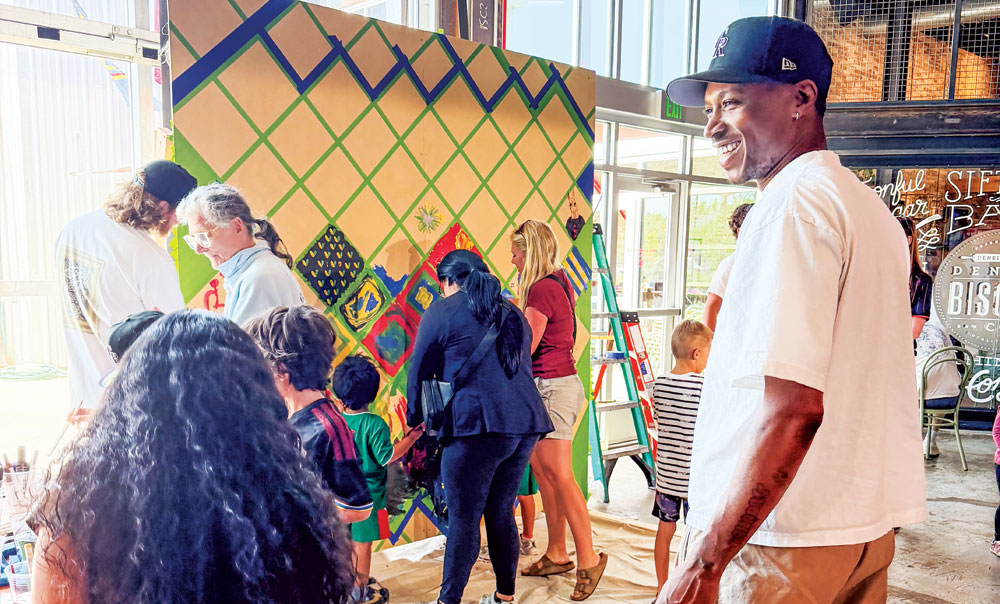
Rob Hill brought paint and markers for the community quilt project. Front Porch photo by Christie Gosch
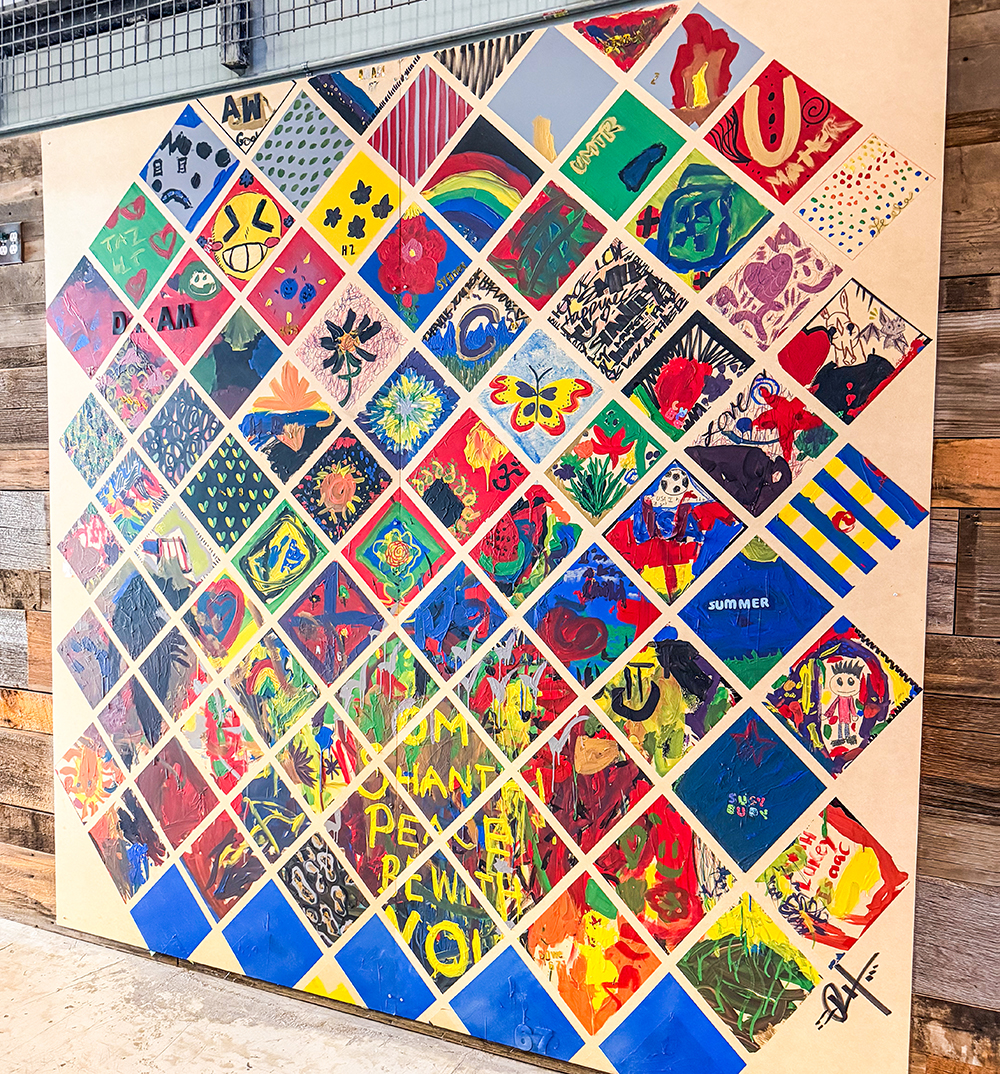
The finished Juneteenth quilt is displayed in Stanley Marketplace.
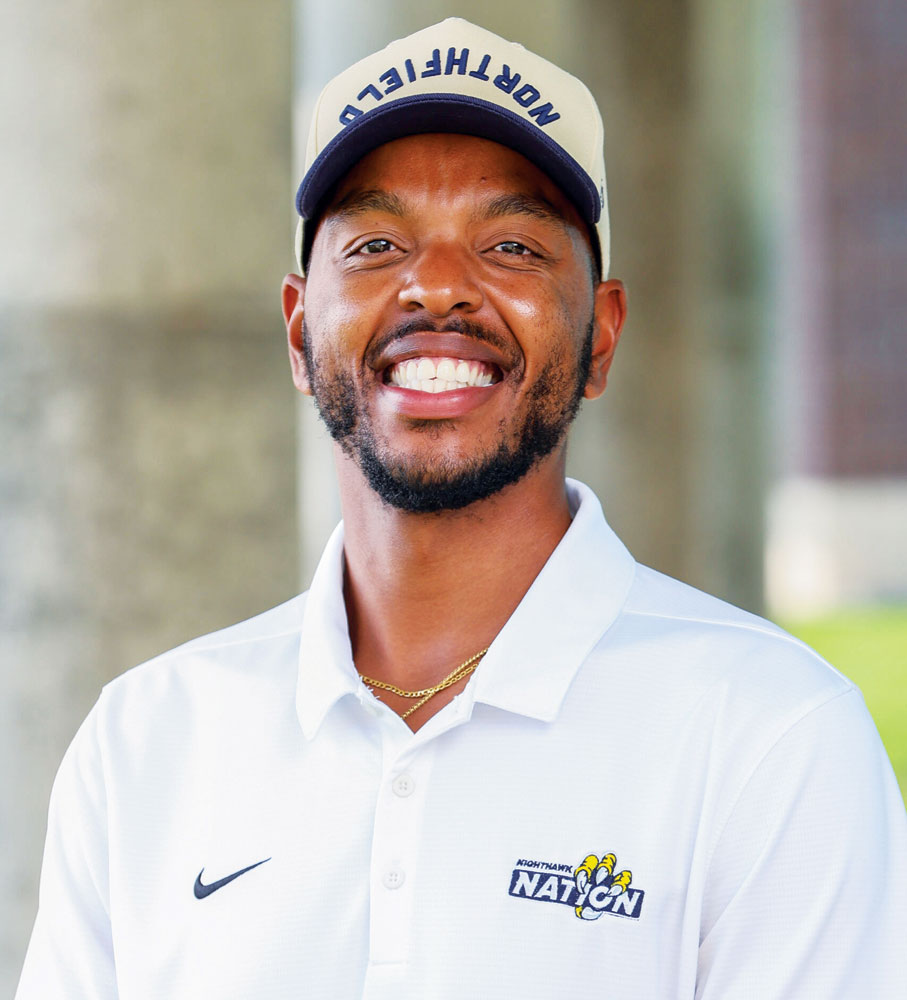 Teacher of the Year Finalist from Northfield High School
Kedibona Ochs was among 21 teachers named as a finalist for the 2027 Colorado Teacher of the Year by the Colorado Department of Education.
Ochs is a ninth grade advisory teacher at Northfield and has been teaching for seven years. He was supervisor of the student council and won the Denver Public Schools Foundation Educator Award in 2025.
Comments from parents on a Front Porch social media post about Ochs included: “He has made a huge impact on my daughter,” “hands down one of the best,” and “LOVE having this man in the community.”
The finalists will be announced in September, and the winner will be revealed in October.

0 Comments