


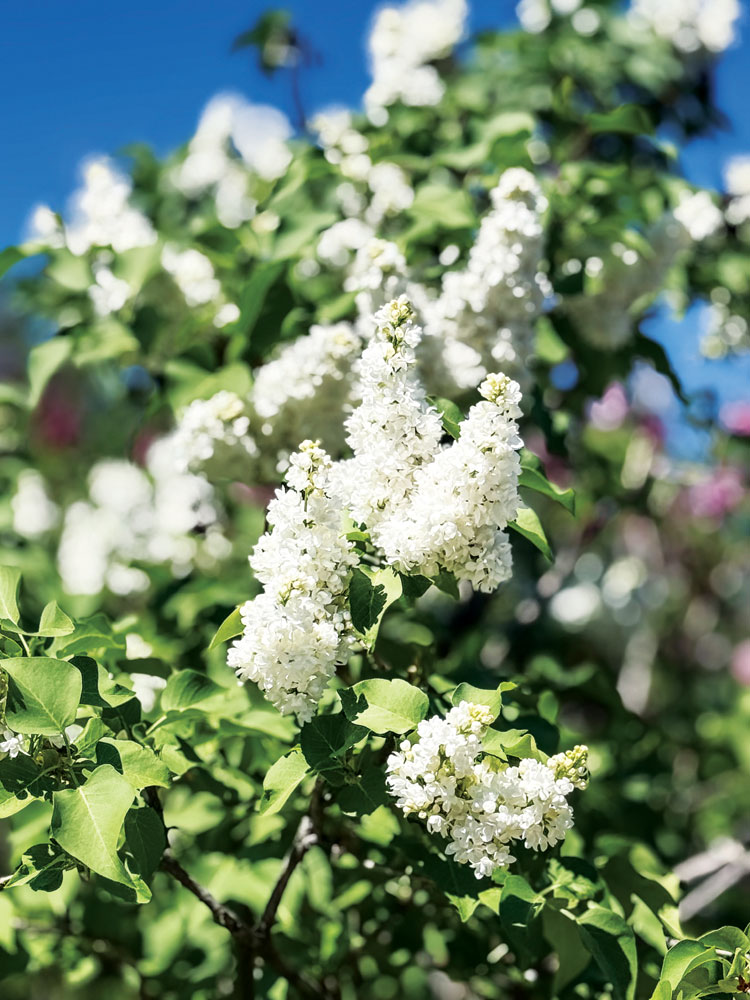
Sweet-smelling lilac flowers bloomed earlier than expected in Denver this year.
On a sunny 70-degree April day, crowds of visitors were drawn to the Denver Botanic Gardens. What they saw were the beautiful colors of blooming flowers and trees around every corner.
What they didn’t see was the work going on to understand why those spring blooms were earlier this year and what that means for the future.
The process is called phenology—the study of plant and animal life cycles and how they’re influenced by changes in the climate.
Cindy Newlander, associate director of horticulture (plant records), has worked with a team documenting the 18,000 different types of plants at the gardens through databasing, mapping, labeling, and photo documentation since 2002. Newlander, a self-described “data nerd,” keeps track of when plants bloom.
“It’s concerning when you start to see things bloom so early (April 2), and you see trees leaf out. We know what can happen here in the late spring when heavy snowstorms can cause a lot of tree damage,” she said, while standing under a large flowering crabapple tree.
She said data tells her 2026 is similar to 2012 and 2017, two other years notable for dry and early springs. “We’re a little bit ahead of those years,” she added, judging from images of plants in bloom over time.
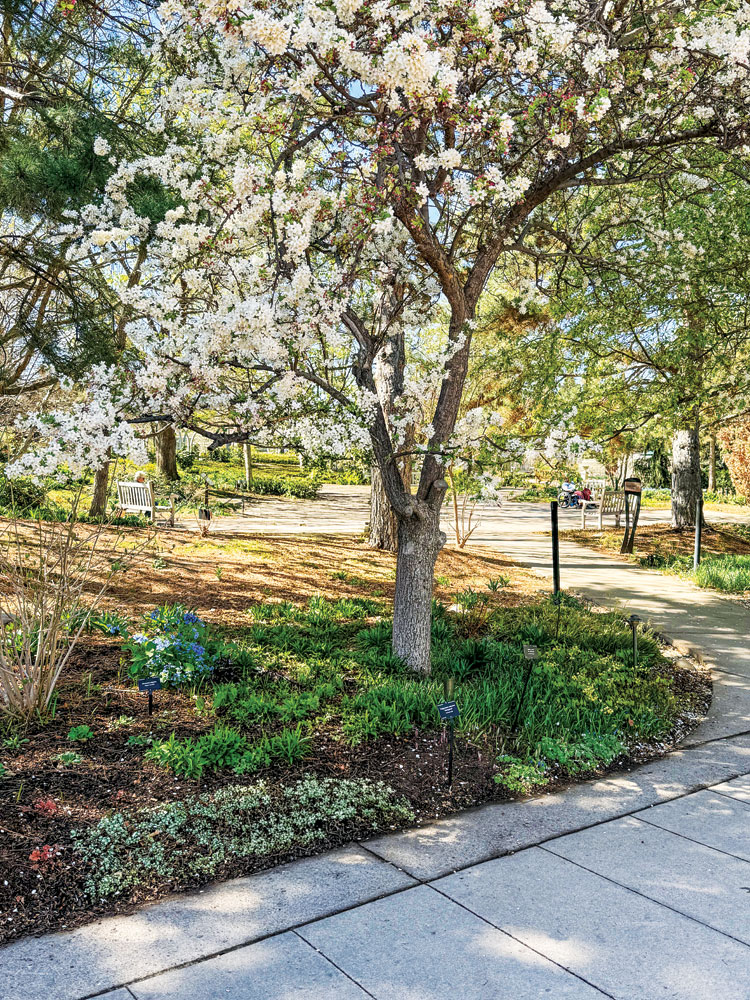
A crabapple tree was in full bloom on April 2 at the Denver Botanic Gardens.
The data is paired with observation, Newlander said. “I would usually associate our crabapples blooming in line with when we’re having our annual plant sale (May 8 and 9) near Mother’s Day. Usually, that’s when these guys are in full bloom.”
As she made her way along the pathway she added, “I have fond memories of walking down the sidewalks with a cartload of plants with a whole flurry of snow falling on me and all of the little petals blowing as they’re finishing up.”
This year, Newlander said, the trees were reaching that same point in early April. They were already starting to move towards having more fruit on them than flowers.
The trees, she said, are an indicator of change through the years and what’s happening this year across Denver. And it’s not just the crabapple trees. Lilac bushes and many other plants that usually peak in mid-May were in full bloom in early April, which she called a “weird” occurrence.
Newlander is also concerned about migrating insects and birds not finding pollen sources because plants are blooming too early and not getting pollinated to create fruit and seed. Those are the sorts of things that are being studied more broadly in phenology, she said.
As she walked through the gardens pointing out plants, she explained that science is not just for “data nerds.” There are phenology trails at the gardens that encourage “citizen science” for specific plants, where anyone can report what they see. People can also document plants in backyard gardens or neighborhoods and on nature trails. And there are apps like Budburst and iNaturalist to help users keep track of what’s living around them.
Those are all pieces of phenology that help give experts a clearer picture of what’s happening to our planet, here in Denver or in a local microcosm. Newlander said the gardens’ staff members know what they can expect from year to year, “especially as we continue warming.”
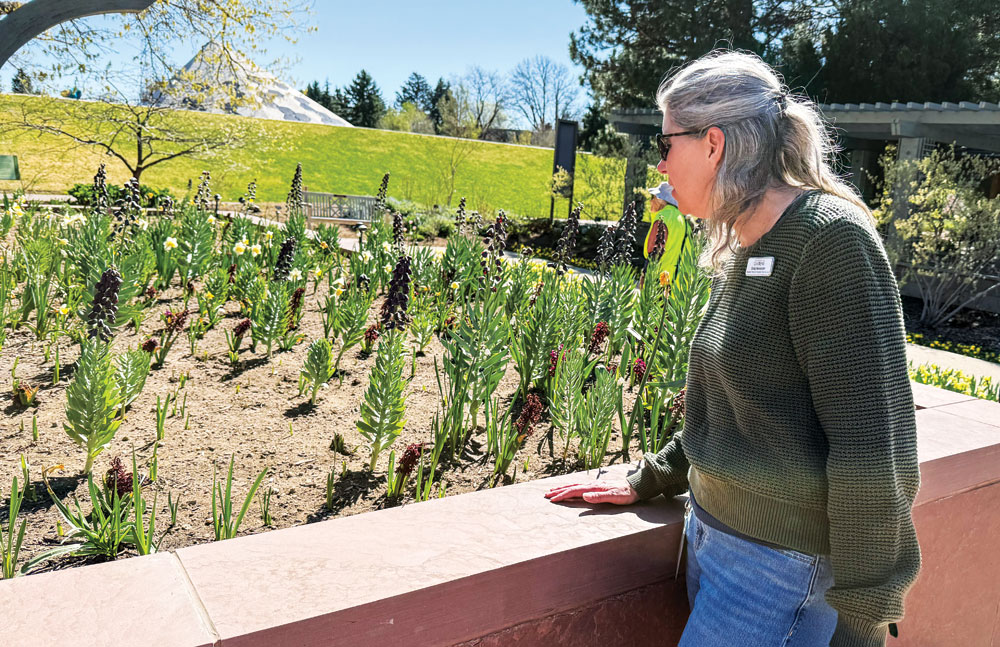
Cindy Newlander, associate director of horticulture (plant records), stopped to look at the growth status of plants in the annuals garden during an early spring blooming season.
The season is not necessarily an indication of the months ahead, she said. Plants that grow later in the season will usually stay on schedule, and things “even out” in June and July.
The weather changes are all part of the Botanic Gardens’ ability to “roll with the punches” and be welcoming and accessible to visitors, Newlander continued.
This year has also meant a change for visitors coming to see the tulip blooms in the annuals garden, a display that was changed to daffodils due to fungal issues in the tulip bulbs and soil, where thousands of bulbs are planted every year.
Those flowers and plants are all part of \the database Newlander runs along with the mapping system. The information is available to the public on the Gardens Navigator site (tinyurl.com/FP-GardensNavigator), a public interface of the plant collection that includes the trails information. And there are two phenology organizations—Project Budburst and National Phenology Network.
The early spring is “part of our natural climate cycles or maybe slightly man-made climate cycles,” Newlander said. Her advice: “Don’t freak out. If you’re really interested, start tracking.”
Front Porch photos by Linda Kotsaftis

0 Comments